Archives

Categories

All
120 Dragon 百二龍
13 Ming Tomb 明十三陵
240 LongFenJing ​二百四+龍分
24 Mountains 二十四山
3 Yi 三易
60 TouDiLong 60透地龍
60 YinSo Long 60盈縮龍
6Jia 六甲
72 ChuanShanLong 72穿山龍
7 Star Robbery Method 七星打劫法
8 Killing Yellow Stream 八煞黄泉
AiXing 挨星
AnJing FuDuan 暗金伏斷
AnJing FuDuan 暗金伏斷
AnXingJue 安星訣
BaChunGuaGongWei 八純卦宮位
BaGongWei 八宮位
BaGongXiaGua 八宮下卦
BaGua FenJing 八卦分金
BaGua LoShu Fa 八卦洛書法
BaGua ZhiZhu 八卦为主
BaiJiShan 白雞山
BaSha HuangQuan 八煞黃泉
BaZhai MingJing 八宅明镜
BaZhai MingJing – 八宅明镜
BaZiFEngShui 八字風 水
BaZi XingGe FenLei Fa 八字性格分类法
BaZi 八字
BaZi 八字
BenGua 本卦
Betraying Master 欺師滅祖
BianYi 變易
BiJian 比肩
BoSha AiXing Fa 撥砂挨星法
Butcher’s Grave
BuYi 不易
CaiGuanYin 财官印
CanShi JiYe 蠶食幾葉
Case File
ChanShi JiYe 蠶食幾葉
ChaoYaoHuanXiang 抽爻換象
ChenMen 城門
Chen WenGuo 陳文國
ChuanShan DouDi 穿山透地
ChuanShan TouDi 穿山透地
ChuGua 出卦
ChunNiu Tu 春牛图
ChunNiu Tu 春牛图
ChunYin ChunYang 纯阴纯阳
CiTang 祠堂
CiXiong 雌雄
Community Service
CuiGuanPian 催官篇
DaoFaBenWuDuo 道法本無多
DaSanYuan 大三元
DaZhuan 大傳
DiLi BianDanZi 地理鉛彈子
DiLi BianZhen 地理辨證
DiLi BianZhen 地理辨證
DiLi XinFa 地理新法
DiMu Jing 地母经
DingChaiGui 丁財貴
DingGua JingKou Jue 定卦金口诀
DingJu 定局
DingYaoFa 定爻法
DingYou 丁酉
DiTianSui 滴天髄
DongDa GuoNian 冬大如年
DongJing 動靜
DongZhi 冬至
Dragon God 龍神
DunXingTaiBaiZhiShu 遁行太白之書
Earth Xue 土穴
Eliminate Sha Acquire Water 消砂纳水
ErShi Ba TianXing 廿八天星
ErShi BaXiu 廿八宿
ErSi TianXing Fa 廿四天星法
ErYuan BaYun 二元八運
ErYuan 二元
Eulogy Of QiuGong 丘公頌
FanFu Yin 反伏吟
FanGong Shui 反弓水
FanGua ZhiZhu 反卦为主
FangYuan Tu 方圓圖
Fang ZhiZhu 房为主
FaQiXiang 法器象
FeiGong 飛宫
FeiXing 玄空飛星
FeiXing 玄空飛星
FeiYao Fa 飛爻法
FeiYaoFa 飛爻法
FenChaShui 分叉水
FenFangFa 分房法
FengShui Canopy 天篷
FengShui LunLui Zhuan 風水輪流轉
Feng 风
Fibonacci
FuGuiZhaiTian 富贵在天
FuHuiTang 福惠堂
FuMu ChaiGuan 子父財官
FuMuSanBanGuaWei 父母三盤卦位
FuTou DingGong Fa 符頭定宮法
FuTou TuiGua 符頭推卦
FuTou 符頭
FuXing ShuiFa 輔星水法
Genting FengShui 云顶風水大師
GePan 格盘
Golden Section
Gong 工
Guan Clan Ancestral Shrine 管氏宗祠
GuanLu 官祿
GuanWang Zhi Qi 关旺之气
GuaYun 卦運
GuBenLungShuiJing 古本龙水经
GuiChang 归藏
GuiRen 貴人
GuiShiNi 鬼食泥
GuLau FangFa 古老方法
GuoLuYinYang 过路阴阳
GuSanFen 古三墳
GuSanShi 古三式
HanLong Jing 撼龍經
Heavenly Heart 天心
Heavenly Secret Important Saying 天機要語
HeHua 合化
HeShang Shi 和尚師
HeTu 河圖
HongFan 洪範
HongLuan JiaZi 紅鸞甲子
HongLuan ShuiFa 紅鸞水法
HouTian Pai Yang Zhai 后天派阳宅
HouTian Pai 后天派
HuangDiZhaiJing 黃帝宅經
Huang ShiGong 黄石公
HuangShi Gong 黄石公
HuaSha NaShui 消砂納水
HuaShuo QiFen LiuSan Fen 话说七分留三分
HunTian NaJia 渾天納甲
HunTian 渾天
HunYi 渾儀
Hu ShunShen 胡舜申
JeRi DeXin 幾日得辛
Jiang JingChuan 江靜川
Jiang TaiGong 姜太公
JianYi 簡易
Jiao RenShan 焦仁山
JieChai 劫财
JieQi 節氣
Jie 界
JiGu BaChan 幾姑把蠶
JiGu BaChan 幾姑把蠶
JiLong JuShui 幾龍治水
JiLong JuShui 幾龍治水
JinFangBaGongGua 京房八宮卦
JingKou Jue 金口訣
JingLong 金龍
JingQiShen 精气神
JingShui ReYue 金水日月
JingShuoYuGuan 金锁玉关
Jing 静
JiNiu GengDi 幾牛耕地
JiNiu GengDi 幾牛耕地
JiRe DeXin 幾日得辛
JiuXingGongWei 九星宮位
JiuXing ZhiZhu 九星为主
KongWang 空亡
Lai BuYi 賴布衣
LianShan 連山
Lian TianChe 量天尺
LianZhuSanBanGua 连珠三板挂
Liao JunQing 廖均卿
LiChun 立春
LiChun 立春
Li DingXin DaShi 李定信大师
LienShan 连山
Li HuShan 李胡山
Li KuiMing 李居明
Lin ChunXiong 林春雄
LingShen 零神
LingTou Shui 淋头水
Lin JingBao 林金寶
LinLangXian 林浪仙
LinPanXian 林半仙
LiPan 立盘
LiQiXiang 理氣象
LiuFa 六法
LiuJia FeiGhttps://davidyek.sirajuislam.com/yifengshuiong 六甲飛宫
LiuJiangDong Grave 劉江東墓
LiuJia Xun FuTou 六甲旬符頭
Liu ZhuFen 刘祖坟
LiXiang ShouShui 立向收水
LiXue 理學
LongMen BaDa Ju 龍門八大局
LongShan XiangShui 龍山向水
LoShu Ding LingZhen 雒書定零正
LouChaiSha 漏財煞
Lou 楼
LuanTou WuZheng LiQi WuJia 峦头无假理气无真
LuanTou YinYang 巒頭陰陽
LuanTou Zhong BuLi LiQi LiQi Zhong BuLi LuanTou 巒頭中不離理氣理氣中不離巒頭
LuanTou 峦头
LuGuo YinYang 過路陰陽
LuMa GuiRen Fa 祿馬貴人法
LuMa GuiRen 祿馬貴人
LungGuo Tang 龍過堂
LungShanXiangShui 龍山向水
LuoChen 罗城
LuoPan 罗盘
LuoShu 洛書
MangNian 盲年
MangShen 芒神
MianXiang 面相
NaJia 纳甲
NaYin 納音
NeiDan Pan 內丹盤
NeiGua 內外
NiQiu Shi 泥鳅師
Nobleman 貴人方
Ode To Flying Stars 飞星赋
Ode To Mysticism 玄机赋
PaiLongJue 排龍訣
PanXian 盤線
Peach Blossom Sha 桃花杀
Perfect Storm
PianChai 偏财
PianYing 偏印
PiMa 驛馬
PoJun DaiJia 破军带甲
Politician 高官之墓
Provocateur
PurpleWhite 紫白诀
PurpleWhite 紫白诀
QianKunGuoBao 乾坤國寶
QianKunGuoBao 乾坤國寶
QiLiuFa 氣流法
QiLiu 氣流
QiMenDunJia 奇门遁甲
QiMen SanShi 奇門三式
Qing Eastern Tombs 清东陵
QingHua 清华
QingLong LunJian 青龍論劍
QingNanAoYou 青囊奥语
QingNanAoYou 青囊奥语
QingNanJing 青囊经
QingNanJing 青囊经
QingNanXu 青囊序
QingNanXu 青囊序
QiongTong BaoJian 穷通宝鉴
QiSha 七杀
QiTu 气图
Qiu YanHan 丘延翰
QiZhenBaFa 奇針八法
QiZheng SiYou 七政四餘
Qi 氣
Recieving Yin Pushing Sha 收山出煞
RenPanGongGua 人盤宮卦
RenPan ZhongZhen BoSha Fa 人盤中針撥砂法
RenZhongXue 人中
RiZhu ChuangRuo 日主强弱
RuDiYan 入地眼
RuDiYan 入地眼
RuDiYan 入地眼
SanBan Gua 三般卦
SanBuZuo 三不做
SanCai 三才
SanChai 三才
SanFa 山法
SanFen SanHe 三分三合
SanFen 三 墳
SanHe Si Da ShuiKou 三合四大水口
SanHe 三合
SanHe 三合
SanJi LiuXiu 三吉六秀
SanLiau 三僚
SanQi SiJi 三奇四吉
SanQi 三奇
SanShan LiuXian 三山六线
SanShen ShuiFa 三神水法
Sanyang ShuiFa 三阳水法
SanYi 三易
SanYuan DaGua 三元大卦
SanYuanDahttps://davidyek.sirajuislam.com/yifengshuiGua 三元大卦要訣
SanYuan FeiXing 三元飛星
SanYuanFeiXing 三元飞星
SanYuan JiuXing Fa 三元九星法
SanYuan JiuYun 三元九運
SanYuan 三元
SanYuan 三元
Seat Of Wealth 财富座位
Secrets Of XuanKong 玄空秘旨
ShangGuan 伤官
ShanGuan RenDing ShuiGuan Cai 山管人丁水管財
ShanHaiJing 山海经
Shao WeiHua 邵偉華
ShaoYung 邵雍
ShaWang Zhi Qi 杀旺之气
ShengJi 生基
ShengSiYouMing 生死有命
ShengWangJue 生旺賦
ShengWang Zi Qi 生旺之气
ShenSha FengShui 神煞風水
ShenSha 神殺
Shen 神
ShiDao TianXing Fa 十道天心法
ShiDao 十道
ShiEr YuanShuai XinLei 十二元帥行雷
ShiFa 筮法
ShiMuXian 蝨母仙
ShiShen 十神
ShiShen 十神
ShiShen 食神
ShiTuiLun 十推论
ShiYe 十翼
ShouShanChuShaJue 收山出煞訣
ShuiFa 水法
ShuiLongJing 水龍經
ShuoGua Zhuan 說卦傳
ShuQiXiang 数氣象
SiHeYuan 四合院
SiJi 四吉
SiMa DuoTuo 司馬頭陀
SiMa DuoTuo 司馬頭陀
SiMa ShuiFa 司马水法
SiQi SanJi 四吉三奇
Sitting Mountain 8 Killing 坐山八煞
Sitting Mountain Robbery Killing 坐山劫煞
SiXiang YinYang Fa 四象陰陽法
SiXiang 四象
SiZhu BaZhi 四柱八字
SiZhu BaZhi 四柱八字
Star Casino Sydney
SuiDe He 歲德合
SuiDe 歲德
TaiJi 太极
TaiSui 太歲
TaiXing 替星
TaiYi ShengShui 太一生水
ThongShu 通勝
ThongShu 通勝
Three Heavens 三天
TianDi FanYin 天地反吟
TianDiRen 天地人
TianFang DiYuan 天方地圆
TianFu DiFan 天伏地反
TianRen HeYi 天人合一
TianXing Pai 天星派
TianXing 天心
TianXing 天星
TianXing 天星
TianYi GuiRen 天乙貴人
TianYi 天乙
TianYuan DiFang 天圆地方
TianYuJing 天玉经
TianYuJing 天玉经
TiXing 替星
TiYung 體用
TuanCi 彖辭
TungShu 通書
Tycoon Gou 郭台銘
Tycoon Grave 富翁墓
Tycoon Li 李富翁
Vein 个字下脉
Viva
Walking The Dragon 尋龍點穴
WangTingZhi 王亭之
WanNianLi 萬年曆
Water Shed Xue 水脱穴
WenYan Zhuan 文言傳
Word Word Gold 字字金
WuChang Pai 無常派
WuGui YunChai 五鬼運財
WuMing Xue 无名穴
WuXian 五线
WuXin RenGe 五型人格
WuXin ShengKe Fa 五行生克法
WuXin 五行
WuYin 五音
XianDai SanYao 現代三要
XiangCi 象辭
XiangXue 象學
XiaoXuanKong 小玄空
XiCi Zhuan 系辭
XingJia 形家
XingShiPai 形勢派
Xing ZhiZhu 星为主
XKDG KouJue 玄空大卦口訣
XuanDao 妙道
XuanGuan ThongQiaoGe 玄關同竅歌
XuanGuan 玄關
XuanKong 4 Classics 玄空四经
XuanKong DaGua 玄空大卦
XuanKong DaGua 玄空大卦
XuanKong Da WuXing 玄空大五行
XuanKong Gua 玄空卦
XuanKongSanJue 玄空三诀
XuanKong 玄空
XuanKong 玄空
XuanZe QuiZhen 选择求真
XueXinFu 雪心赋
XuGua Zhuan 序卦傳
XunShou 旬首
Yang CangHua 陽藏華
YangGong GuFa 楊公古法
YangGong XinFa 杨公新法
YangZhengLiaoLiu 楊曾廖劉
YiGua ChunQing 一卦純清
YiJing 易經
YiLiSu 一粒粟
Yin FengShui 阴风水
YingYangLuoShu 阴阳洛書
YinYang Dun 陰陽遁
YinYang Fa 陰陽法
YinYang GuiRen 陰陽貴人
YinYang Jie 陰陽
YinYang 阴阳
YiWu YiTaiJi 一物一太極
YiZhuan 易傳
YiZhuDingJiXiong 一柱定吉凶
YongShen 用神
YongShen 用神
YuanGua 元卦
YuCheJing 玉尺经
YuCheJing 玉尺经
YuCheTang 玉尺堂
YuHanJing 玉函经
YungYaoFa 用爻法
ZaGua Zhuan 雜卦傳
ZangShu 葬书
ZangShu 葬书
ZhanBu ZhanBu 占卜
Zhang BiShi 張弼士
Zhang JiuYi 張九儀
Zhang QingYuan 张清渊
ZhangShu 葬書
ZhangYan Fa 長眼法
ZhaoShen 照神
ZhenCai 正财
Zheng JinGui 郑景贵
Zheng QingFeng 鄭清風
ZhenGuan 偏财
ZhenPianXiang 正表向
ZhenShen 正神
ZhenYing 正印
ZhenYinZhenYang 真阴真阳
ZhongHuo ErXing Fa 中火二星​法
ZhongQi 中氣
ZhongTianGua 中天卦
ZhongTianGua 中天卦
ZhouShengXiangSi 座生向死
ZhouSiXiangSheng 座死向生
Zhou WenWang 周文王
ZhouYi 周易
ZhouZhongPai 中州派
ZhuXianPai 祖先牌
ZiBai Jue 紫白賦
ZiFu ChaiGuan 子父財官
ZiMen 紫門
ZiPing BaZi 子平八字
ZiPing BaZi 子平八字
ZiXing 紫星
天寶秘訣 TianBao MiJue
滴滴金 Drop Drop Gold
金口訣 JingKouJue

1/1/2026
The 《說卦傳》 (Shuōguà Zhuàn) served as a master key for narrative memory. By transforming abstract trigrams into a cosmic family (Father Heaven, Mother Earth, their children—Thunder, Water, Mountain, Wind, Fire, Lake) with rich sets of attributes (animals, body parts, virtues, natural forces), it allowed scholars to decode hexagram names as vivid, mini-stories. Remembering ䷂ 屯 Zhūn wasn’t memorizing a sound; it was visualizing the drama of “Water (the perilous abyss) beneath Thunder (the explosive birth)”—a perfect picture of “Birth Throes.” The Shuōguà didn’t just list meanings; it provided the symbolic vocabulary and relational logic to make every hexagram name a self-evident, unforgettable scene from the great epic of yin and yang.

Upper Scroll (上經): The Formative

​乾坤屯蒙需訟師

In the beginning, there was ䷀ (1) 乾 (Qián), the Heaven, and ䷁ (2) 坤 (Kūn), the Earth. From their primal separation, the myriad things of existence burst forth into being. Deep in the dark soil, a single seed, ䷂ 水雷: (3) 屯 (Zhūn), stirred with a desperate desire to break through [trembling water]. When it finally sprouted, it beheld the vast, blooming world with the wide, dazed eyes of ䷃ 山水: (4) 蒙 (Méng), a dreamer awash in bewildering wonder [dreamscape of mountain behind clouds]. But dream gives way to need. Reality demanded nourishment, and so began a time of ䷄ 水天: (5) 需 (Xū), of waiting and longing [heavy dark cloud but rain yet to arrive] for sustenance. When resources proved scarce, conflict inevitably arose, leading to ䷅ 天水: (6) 訟 (Sòng), the strife of dispute [heavy downpour moving apart]. Yet such discord could not breed its own resolution. It required the structure of ䷆ 地水: (7) 師 (Shī), the discipline of a teacher, the order of law, to adjudicate and mend [using earth to channel water].

Upper Scroll (上經): The Civilisation
​
比小畜兮履泰否

From this hard-won order, a new understanding grew: all must learn to live in close harmony, in the union of ䷇ 水地: (8) 比 (Bǐ) [water resting on earth]. Through this fellowship came small, steady gains, the careful accumulation of ䷈ 風天: (9) 小畜 (Xiǎo Xù) [wind above heaven]. In a world so ordered, people learned the sacred art of ䷉ 天澤: (10) 履 (Lǚ), to tread with conscious, reverent care [heaven above marsh]. And it was precisely upon this careful path that true peace, ䷊ 地天: (11) 泰 (Tài), was finally achieved [earth above heaven, communion]. Yet, in the very heart of peace, stagnation began to gather. This was ䷋ 天地: (12) 否 (Pǐ), the blockage that follows prosperity [heaven above earth, separation], a fall from grace that is swift and sudden.

同人大有謙豫隨


To break this paralysis required a rediscovery of common purpose, the fiery unity of ䷌ 天火: (13) 同人 (Tóng Rén) [heaven above fire]. Through collective will came a breakthrough, unleashing an era of great harvest and possession, ䷍ 火天: (14) 大有 (Dà Yǒu) [fire above heaven]. But in abundance lies peril; to hold such fortune required the grounding virtue of ䷎ 地山: (15) 謙 (Qiān), humility in austerity [earth above mountain]. A leader must now foster ䷏ 雷地: (16) 豫 (Yù), a genuine and resonant enthusiasm [thunder above earth], for with it comes a devoted following, ䷐ 澤雷: (17) 隨 (Suí) [marsh above thunder].

蠱臨觀兮噬嗑賁

Yet, as the people multiplied, resources strained and a silent decay, ䷑ 山風: (18) 蠱 (Gǔ), festered beneath the surface [mountain above wind]. The community cried out for guidance, for one to oversee them, ䷒ 地澤: (19) 臨 (Lín) [earth above marsh]. The true leader, however, does not rush to act. First comes ䷓ 風地: (20) 觀 (Guān), the profound and patient observation that begins all wisdom [wind above earth]. Seeing the corruption clearly, the leader must then ䷔ 火雷: (21) 噬嗑 (Shì Hé), “bite through” the hard obstacles with unflinching justice [fire above thunder], yet clothe that justice in the graceful beauty of ䷕ 山火: (22) 賁 (Bì) [mountain above fire].

剝復無妄大畜頤,大過坎離三十備


This often means the necessary, difficult work of ䷖ 山地: (23) 剝 (Bō), starving away the rotten and excess [mountain above earth], to allow a pure ䷗ 地雷: (24) 復 (Fù), a turning point to fundamental balance [earth above thunder]. Such action springs from ䷘ 天雷: (25) 无妄 (Wú Wàng), a mind free of selfish illusion [heaven above thunder], which in turn cultivates the profound wisdom for ䷙ 山天: (26) 大畜 (Dà Xù), the great storing and taming of power [mountain above heaven]. True wisdom is not seized, but nourished, ䷚ 山雷: (27) 頤 (Yí), like tending a garden [mountain above thunder], until it reaches a tipping point: ䷛ 澤風: (28) 大過 (Dà Guò), the great passage or overwhelming [marsh above wind], a moment of critical mass that demands a supreme transition. This final passage leads to the very brink, into the bottomless, watery abyss of ䷜ 坎為水: (29) 坎 (Kǎn), the pit of danger and trial. Only by passing directly through this profound darkness can one finally emerge into the brilliant, clinging light of ䷝ 離為火: (30) 離 (Lí), the illuminating clarity of enlightenment itself.

Lower Scroll (下經): Internal Relationship
​
咸恆遯兮及大壯


This is the tale of the lower scroll, the saga of human bonds and the trials of growth. It begins not with grand ideals, but with the most basic pulse: ䷞ 澤山: (31) 咸 (Xián), attraction [marsh above mountain]. It is feeling, a raw, magnetic pull. Yet from this initial spark, if tended, something deeper can root: ䷟ 雷風: (32) 恆 (Héng), constancy [thunder above wind]. But all that is long-held can grow familiar to the point of numbness. This is ䷠ 天山: (33) 遯 (Dùn), withdrawal [heaven above mountain]. From this plateau, a new force gathers: ䷡ 雷天: (34) 大壯 (Dà Zhuàng), the great power of maturity [thunder above heaven].

晉與明夷家人睽


At such a peak, ䷢ 火地: (35) 晉 (Jìn), radiant progress shines forth [fire above earth]. But the light cannot hold forever. It is inevitably followed by ䷣ 地火: (36) 明夷 (Míng Yí), the darkening of the light [earth above fire]. This forced retreat is a withdrawing into oneself. In this darkness, one turns inward to the core: ䷤ 風火: (37) 家人 (Jiā Rén), the family [wind above fire]. To neglect this is to invite ䷥ 火澤: (38) 睽 (Kuí), a bitter divergence [fire above marsh].

蹇解損益夬姤萃

​
Facing this painful obstruction, ䷦ 水山: (39) 蹇 (Jiǎn) [water above mountain], one is humbled. This hardship forces a return for counsel. One must seek ䷧ 雷水: (40) 解 (Xiè), deliverance [thunder above water]. Such a clearing, however, carries a cost. It calls for ䷨ 山澤: (41) 損 (Sǔn), reduction and sacrifice [mountain above marsh]. Only through this purposeful loss can there be ䷩ 風雷: (42) 益 (Yì), increase and nourishing growth [wind above thunder]. This cycle demands a decisive ䷪ 澤天: (43) 夬 (Guài), a resolute breakthrough [marsh above heaven]. And within this resolution, a profound union is recognized: ䷫ 天風: (44) 姤 (Gòu), the meeting of feminine and masculine [heaven above wind]. When people thus come together in purpose, they ䷬ 澤地: (45) 萃 (Cuì), assemble [marsh above earth].

​升困井革鼎震繼


This collective energy then seeks to ䷭ 地風: (46) 升 (Shēng), ascend [earth above wind]. Yet no ascent is endless. One will inevitably face ䷮ 澤水: (47) 困 (Kùn), oppression [marsh above water]. It is exhaustion, a feeling of being trapped as if at the bottom of a deep ䷯ 水風: (48) 井 (Jǐng), a well [water above wind]. The only escape from such confinement is ䷰ 澤火: (49) 革 (Gé), revolution [marsh above fire]. From this turmoil, a new order is established, solid and ritualized like a sacred ䷱ 火風: (50) 鼎 (Dǐng), a cauldron [fire above wind]. This is the earth-shattering ䷲ 震為雷: (51) 震 (Zhèn), a sudden wake-up call that jolts the soul into awareness.

艮漸歸妹豐旅巽


In the stillness of ䷳ 艮為山: (52) 艮 (Gèn), one is like a mountain, immovable [mountain above mountain]. From this rooted calm begins a slow and steady progression forward, ䷴ 風山: (53) 漸 (Jiàn), a gradual ascent [wind above mountain]. To truly adapt is to embrace the spirit of ䷵ 雷澤: (54) 歸妹 (Guī Mèi) [thunder above marsh], likened to marrying the maiden. If navigated with grace, one attains the brilliance of ䷶ 雷火: (55) 豐 (Fēng), an abundant harvest [thunder above fire]. If one falters, they become the wanderer of ䷷ 火山: (56) 旅 (Lǚ) [fire above mountain]. Master this, and the way becomes smooth, entering the phase of ䷸ 巽為風: (57) 巽 (Xùn), the gentle, penetrating wind [wind above wind].

兌渙節兮中孚至


From the joy of ䷹ 兌為澤: (58) 兌 (Duì), the lake’s surface reflecting shared delight [marsh above marsh], springs happiness. This genuine connection allows for ䷺ 風水: (59) 渙 (Huàn), a great dispersion [wind above water]. From this fluidity, one must then draw the boundary, practicing the discipline of ䷻ 水澤: (60) 節 (Jié) to conserve energy [water above marsh]. This restraint cultivates the power of ䷼ 風澤: (61) 中孚 (Zhōng Fú), an inner truth and integrity so profound [wind above marsh].

小過既濟兼未濟,是為下經三十四。


Achieving ䷽ 雷山: (62) 小過 (Xiǎo Guò) is the wisdom of small excess [thunder above mountain]. From such careful adjustments, one may finally arrive at ䷾ 水火: (63) 既濟 (Jì Jì), a state of completion [water above fire]. Yet this very perfection reveals the final, beautiful truth: the journey is never over. One looks up to see that a new crossing has already begun with ䷿ 火水: (64) 未濟 (Wèi Jì), the great river not yet crossed [fire above water]. This is the path of the lower scroll, its thirty-four transformations complete.

In Summary

Now, to name a hexagram, you simply tell me: ‘Who is above? And who is below?’ The name is the story of their meeting.

Take ䷂ 屯 Zhūn, ‘Birth Throes.’ Look: ☵ Water (Kǎn, the Abyss) below, ☳ Thunder (Zhèn, the Arousal) above. The story writes itself: Below, the terrifying, enveloping waters of the womb or the flood. Above, the first, chaotic crack of thunder—the primal shock of life trying to burst forth. Of course it’s ‘Birth Throes’! Water-Thunder is the agony and hope of genesis.

Or ䷆ 師 Shī, ‘The Army.’ ☷ Earth (Kūn, the Mother) below, ☵ Water (Kǎn, the Abyss) above. See it? The water is hidden within the earth (地中有水). The earth is the populous land, the people. The water is danger, the collective peril. How does the earth channel and control this hidden danger? Through discipline and massed ranks—an army, a teacher. It’s not a name; it’s a portrait.

The Shuōguà gives every trigram a hundred faces. So when you see ䷈ 小畜 Xiǎo Xù, ‘Small Harvest,’ as ☴ Wind (Xùn) above ☰ Heaven (Qián), you don’t just see lines. You see: ‘The gentle wind (Xùn, the penetrating daughter) moves across the vast, powerful heaven (Qián, the father).’ The mighty force of heaven is being subtly gathered and tamed by the soft wind—a small accumulation, a gentle storing. The image is the name.

And for order, we have the ‘Later Heaven’ map, the seasonal story: Thunder (Zhèn) erupts in the East at Spring dawn. The Wind (Xùn) and gentle Fire (Lí) of summer follow in the South. The Mother Earth (Kūn) is harvested in late summer. The joyful Lake (Duì) speaks in the West at autumn. The creative Heaven (Qián) and deep Water (Kǎn) contend in the North’s winter. The still Mountain (Gèn) in the Northeast is where the year ends and prepares to begin again.

So when you hear ䷢ 晉 Jìn, ‘Radiance,’ as Fire (Lí) above Earth (Kūn), you see: The sun (Fire, Li) rising brilliantly over the receptive, flat earth (Kūn). It is the very picture of progressive advancement. When you hear ䷣ 明夷 Míng Yí, ‘Darkening of the Light,’ as Earth (Kūn) above Fire (Lí), the story flips: The earth has now buried the sun. The light is hidden, wounded. The name is the inevitable outcome of the image.

In the end, you do not memorize. You recognize. The Shuōguà taught us that every situation in heaven and earth is a meeting of these eight spirits. To name a hexagram is to describe, in the shorthand of family and element, a cosmic drama.

䷪ 夬 Guài, ‘Resolution,’ is ☱ Lake (Duì, the joyous daughter) above ☰ Heaven (Qián, the stern father)—joy decisively confronting power. ䷻ 節 Jié, ‘Restraint,’ is ☵ Water (Kǎn, the dangerous son) above ☱ Lake (Duì, the joyful daughter)—danger threatening to spill over the edges of joy, requiring a dam.

So tell me, apprentice: What is the story of ☲ Fire above ☳ Thunder?”

(The student thinks, using the trigram spirits: “Fire (Li, the clinging eye) above Thunder (Zhen, the shocking movement)… It is like lightning illumining the violent storm from within… It is ‘Biting Through’! ䷔ 噬嗑 Shì Hé!”)
​

“Good. You are beginning to see. Now you are not just a diviner. You are a reader of the world’s oldest, continuous story.”

1/30/2022

A DAY’S WORK OF A FENGSHUI MASTER

​This Chinese New Year eve, we would like to share with you the modus-operandi of a FengShui Master. Prior to an audit, he would have ‘spoken’ to the earth deity of the subject premises, be it using the QiMen oracles or simply by ‘knowing’ telepathically. He has already a framework, of what to do, who to help and most importantly, what the outcome would be. That is the homework, some called, remote sensing.

Upon arrival at the designated time, he don’t quite need to look at the QiMen oracle to tell him where the ShaQi or the ShengQi is. He is trained to recognise form. The foundation of all FengShui school vested upon ‘Cross Line Heavenly Heart’ or some contemporary called it ‘Naked Eye Method’, ‘Cross Road YinYang’ or even ‘Golden Lock Jade Portal’. He sums up everything by a look. He knows the history of the residents or occupants, when, where, how, who, why and which events happened and so forth, without the need to ask. He needs a LuoPan to do this? Nope.

He walks around the property, observing forms. He has the QiMap in his mind. By a glance, he knows what the formation, the rectification needed are and the balancing YinYang that is warranted. All these without the need for the LuoPan. He then decide if he has been paid enough to change the formation? Whether the occupants deserved to be helped?

He then suggest, he needs to set the meridians of such and such. Thus he opens his LuoPan. For short remedy, he uses quick fix employing perhaps, eight mansion the ‘correct version’ of ‘object placement’ with reference to the location of the door. There he measures from the ‘Heaven’s Heart’, to distribute the ‘stars’. Then he measures with his LuoPan above the navel and say, put a lamp there 24-hours, and the quarrelling will stop. Surprisingly, for whatever reason, the quarrelling stops …

For longer remedy, he sets the meridian by ‘butting’ the LuoPan. This he did below the navel. Why below and not above? He adjust the ‘golden line’ with almost both eyes closed. Thus, he does not need a tripod nor a spirit leveler. All he did was he pre-calculated the ‘line’ turn it to that and make sure the needle does the rest of the work. Crude as it may, but this is the tested application since time immemorial.

He satisfies himself that these were done correctly and paused for a second to ‘talk’ to the earth deity. Having confirmed, he speaks to the occupants that by when, they would ‘see’ the omen, event, and whatever name you ought to call, unfolding. He collects his token fee and called it a day.

Short, simple and sweet …

8/13/2020

YUAN GUA  元卦

​Learnt that in Australia there is a revival of another form of SanYuan method. This is called YuanGua 元卦 method. Claimed to have been from the pedigree of GanZhou under the lineage of Liu JingDong, one of the first generation of disciple of Yang YunSong. For more historical account of him, read ‘here’. What is interesting of the claim from this lineage is, they are the only ‘family’ that is allowed to teach the ‘genuine YangGong’ FengShui method to outsiders. Very ‘fishy claim’. The other interesting part of the story is, the ‘transmission of knowledge’ was intact since the ‘cultural revolution’. A good point to ponder, as to how much has really left? Anyway, the ‘lineage holder’ is only allowed to teach the first of three parts within the entire knowledge for mass consumption.
It was said that YuanGua 元卦 provides:

  1. Ten methods to acquired health 丁, wealth 財 and nobility 貴;
  2. Six avoidance of poor 貧, lonesome 單 and extinct 絕;
  3. The real and fake Eight Killing 八煞黃泉;and
  4. Many more… i.e. landform prediction 形

In a nutshell, YuanGua 元卦 revert to the ‘basic’ thus the Yuan元, supposing minus the ‘complication’. Let’s look at two aspects:

Picture

Picture

​FORM 形

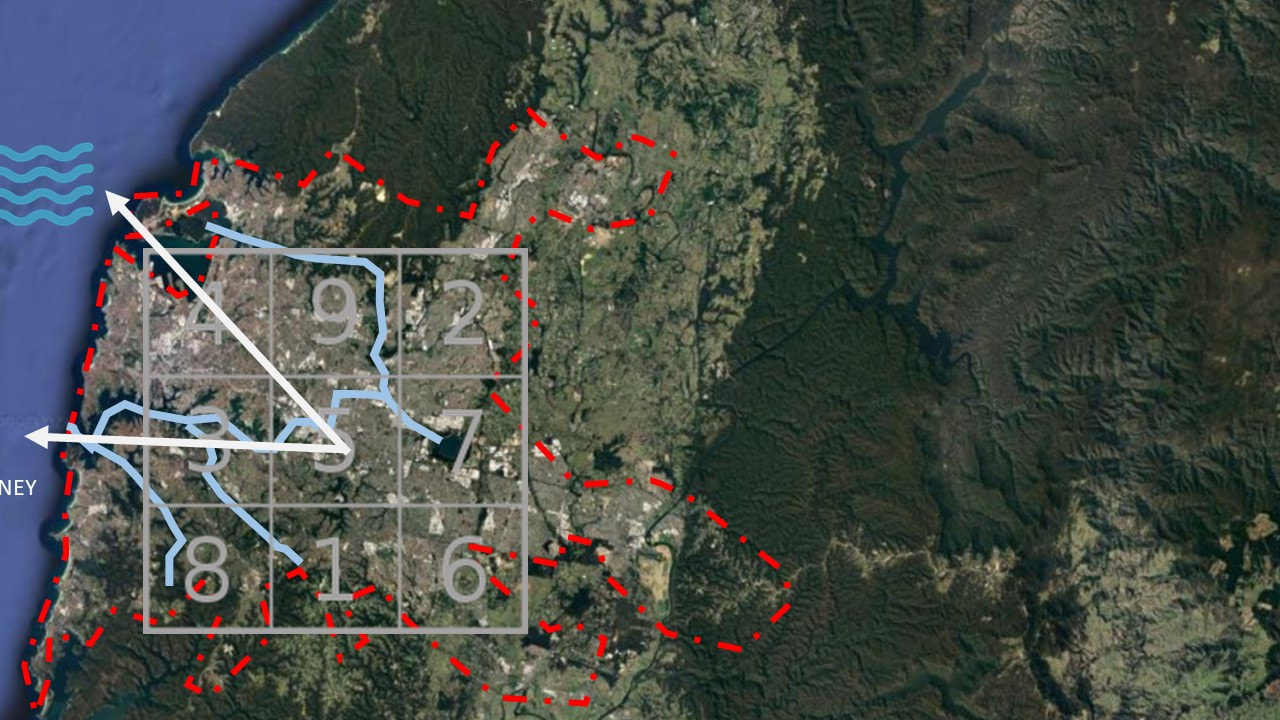
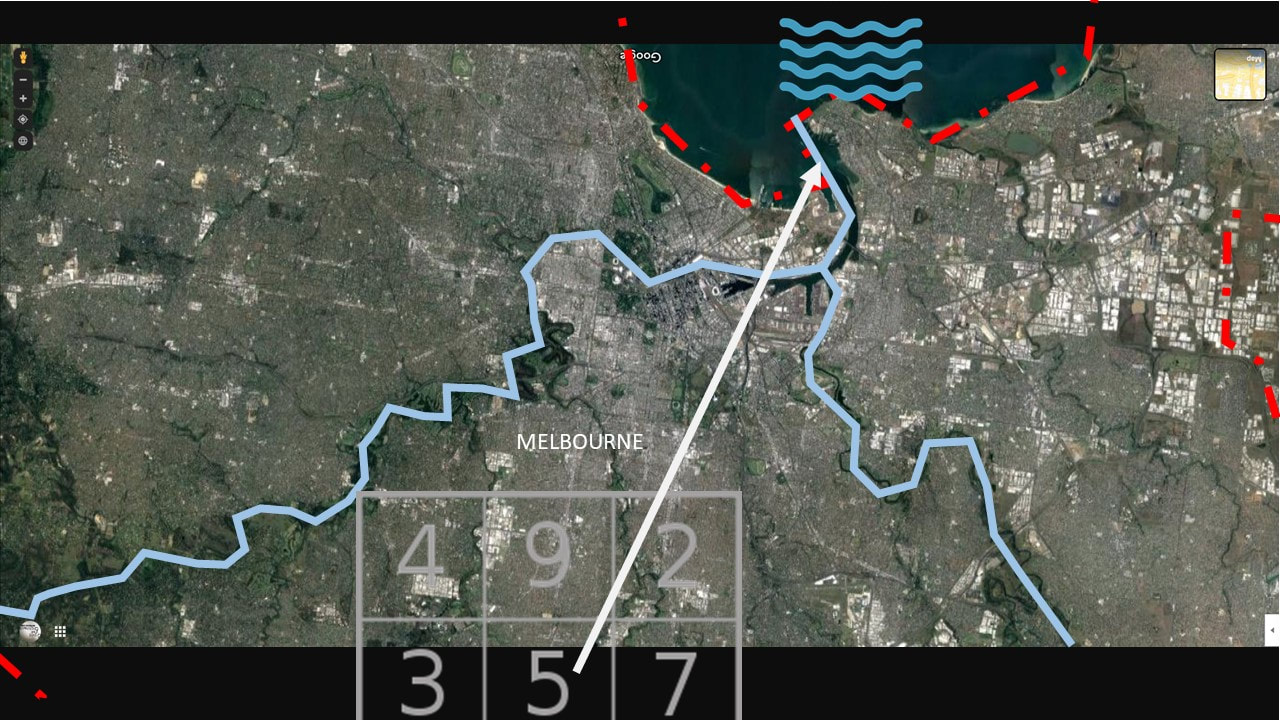
​YuanGua 元卦 pays heavy emphasis on water mouth 水口, instead of dragon 龍.So far this is ‘agreeable’ compared to the ‘mass consumption knowledge’ of SanHe. When the period is ‘prosper’ and the prosperous ‘star’ is in the water mouth sector, the entire area will not be prosperous. This is because the prosperity is being ‘flushed out’. YuanGua 元卦 measures period based on the LoShu 洛書內丹盤. Quoting instances as in Melbourne, during period 2 there was a massive depression. In Sydney, during period 4 almost the same time the Sydney Opera House was built, another massive depression hit Sydney. Unfortunately this is not always true, for other cases. You can always do a ‘reverse engineering’ to proof this point.

Picture

​QI 氣

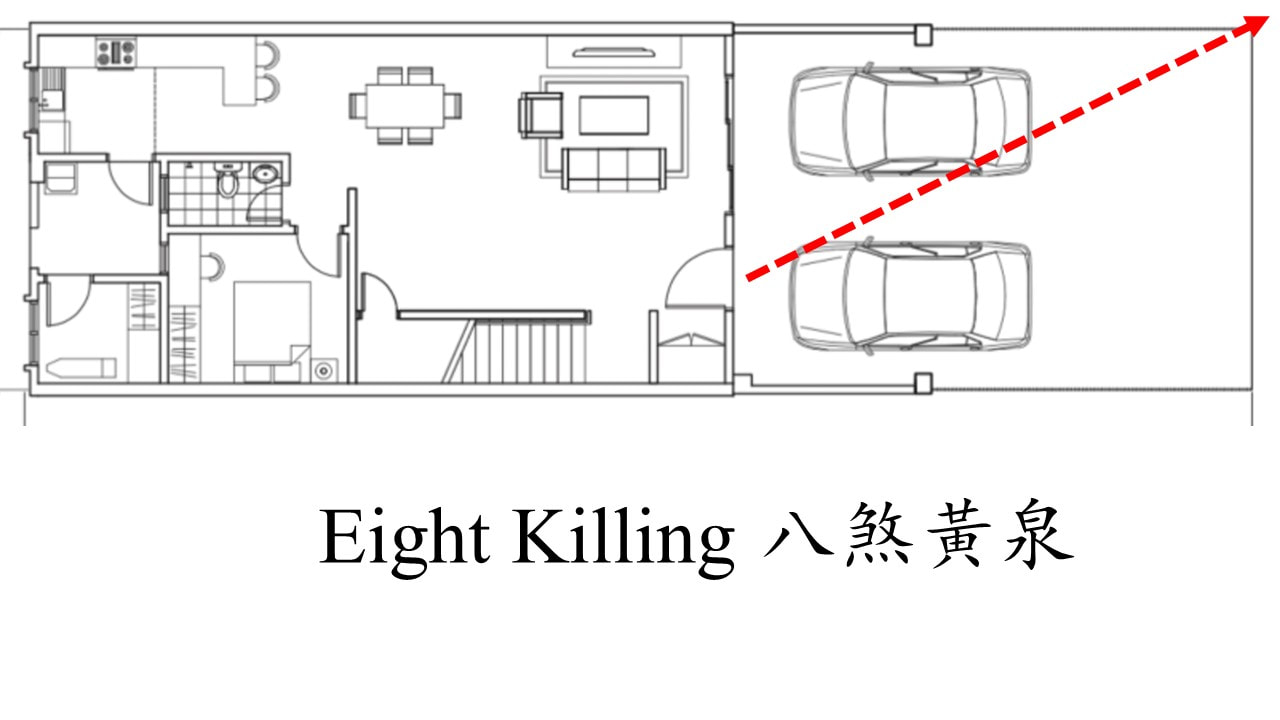
YuanGua 元卦 pays heavy emphasis of immediate landform to Eight Killing 八煞黃泉. This method has been prescribed ‘here’. The only catch here is, YuanGua 元卦 defines, ‘fake’ and ‘real’ Eight Killing 八煞黃泉. This is ‘real’ Eight Killing 八煞黃泉 when conform will ‘screw up your FengShui’ big time, either in health 丁 via Eight Killing 八煞 or in wealth 財 via Yellow Spring 黃泉.There is an undisclosed way of determining this but in landform 形 itself it is very easy to strike this unlucky formation, especially in ‘terrace houses’.

To illustrate this point, Eight Killing 八煞黃泉 will be activated once water is incoming 45 degree of your main gate relative to your main door. In normal situation, it will always be either to the left 龍 or the right side 虎.  The chances are 50-50. If you strike the ‘real’, too bad. If you strike the ‘fake’, congratulations!
So, what are the ‘fake’ Eight Killing 八煞黃泉?

Picture

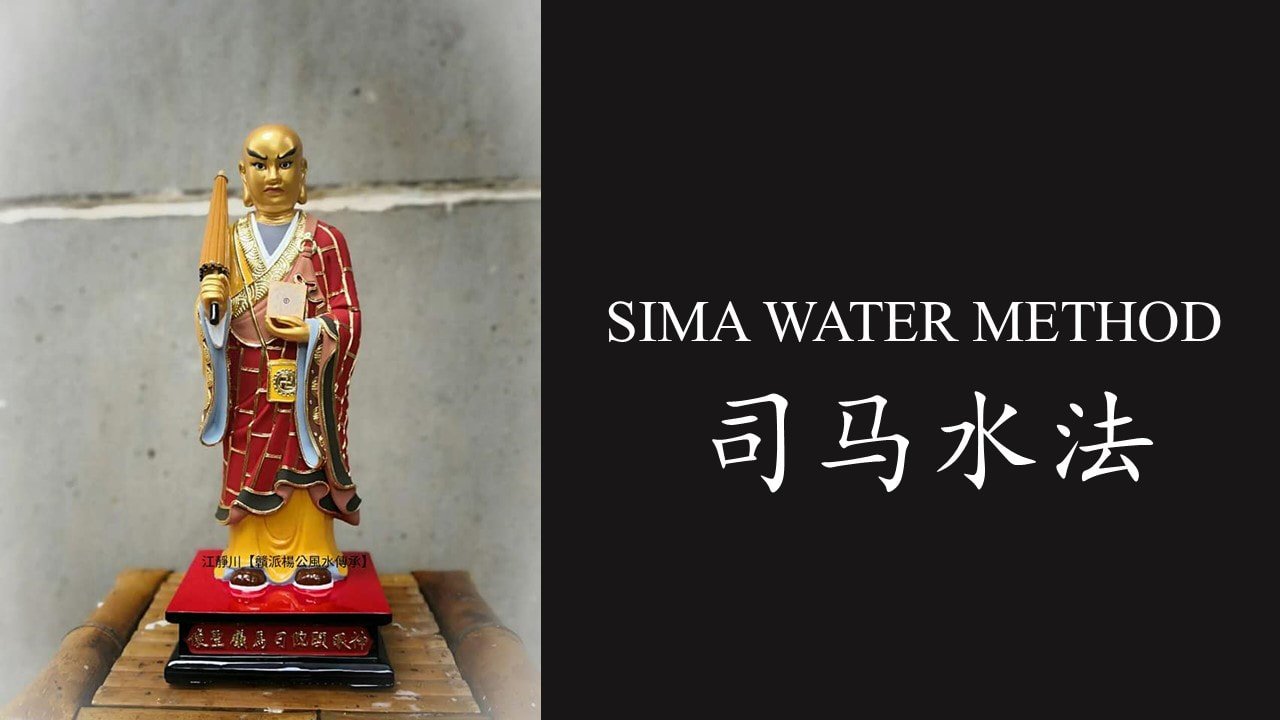
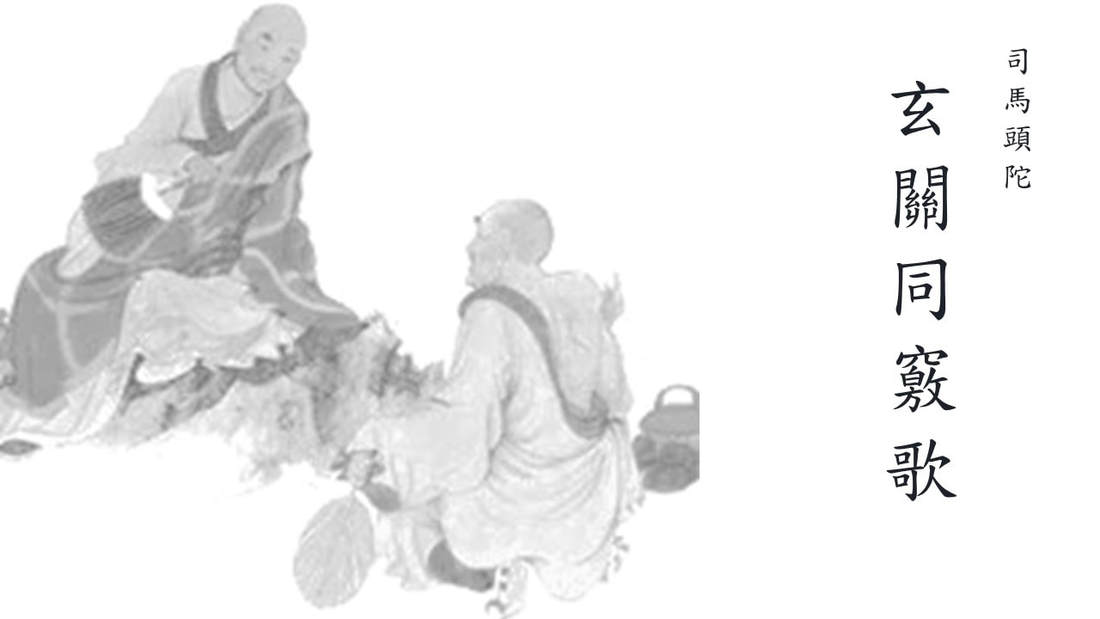
​SIMA WATER METHOD 司马水法

​YuanGua 元卦 borrows from SiMa the Monk Water Method 司马头陀水法:
辛入乾宮百萬莊,
巽山兼巳便為上;
癸位艮上發文章,
丁山兼午喜氣洋;
乙向巽流清富貴,
兼卯為吉主禎祥;
丁坤終是萬斯箱,
癸子同坐大吉昌。
甲向艮朝科第早,
三元地理兼酉卯;
庚喜坤流产英豪,
甲山兼卯须记牢;
丙向巽来多富贵,
壬子同用最重要;
壬遇干宫出官僚,
​山家正用元理高。
​Xin incoming into Qian brings million dwellings,
Xun Mountain skewed Si is the best;
Gui incoming into Gen sector produces good literary works,
Ding Mountain skewed Wu good tiding Qi is prosperous;
Yi facing, Xun Water riches abundant,
Skewed Mao auspicious tidings to the host;
Ding Facing, Kun incoming water creates ten thousand crates,
Gui Zi same seating great auspices;
Jia Facing Gen incoming water obtains good academic achievement,
SanYuan earth principles skewed You Mao;
Gen facing, Kun water produces Heroes,
Jia Mountain skewed Mao must kept in mind;
Bing Facing, Xun coming water brings nobility,
Ren Zi together use are the upmost crucial;
Ren facing Meets Qian water produces officers,
Mountain School [Landform School] correctly applied to the ‘period’ is the highest ‘formula approach’.

​CRITIQUES

Is kind of a cool, to belong to a lineage. There are plenty of lineages for sales in GanZhou, GuangXi. You take a stone and throw, almost anybody got hit is a lineage holder of GuangXi YangGong FengShui especially central within the descendants of Yang楊, Zheng曾, Liao廖 and Liu劉. This is where people says, abusing lineage rocks become lineage sucks!

The Liu劉 method has been largely available in the masses covering all the ‘popular theories’ from the Taiwanese styles SanHe to the HonKee styled QMDJ. The YangGong ‘old method’ school prescribed that these were watered down methodologies.
​
The late LDX has a point, especially when you reworked the YangGong methods against the Eight Killing 八煞黃泉, one will notice that when YangGong methods are in place, Eight Killing has been automatically taken care of. SiMa Water Method 司马头陀水法 is only an extension to the YangGong methods.
8/10/2020
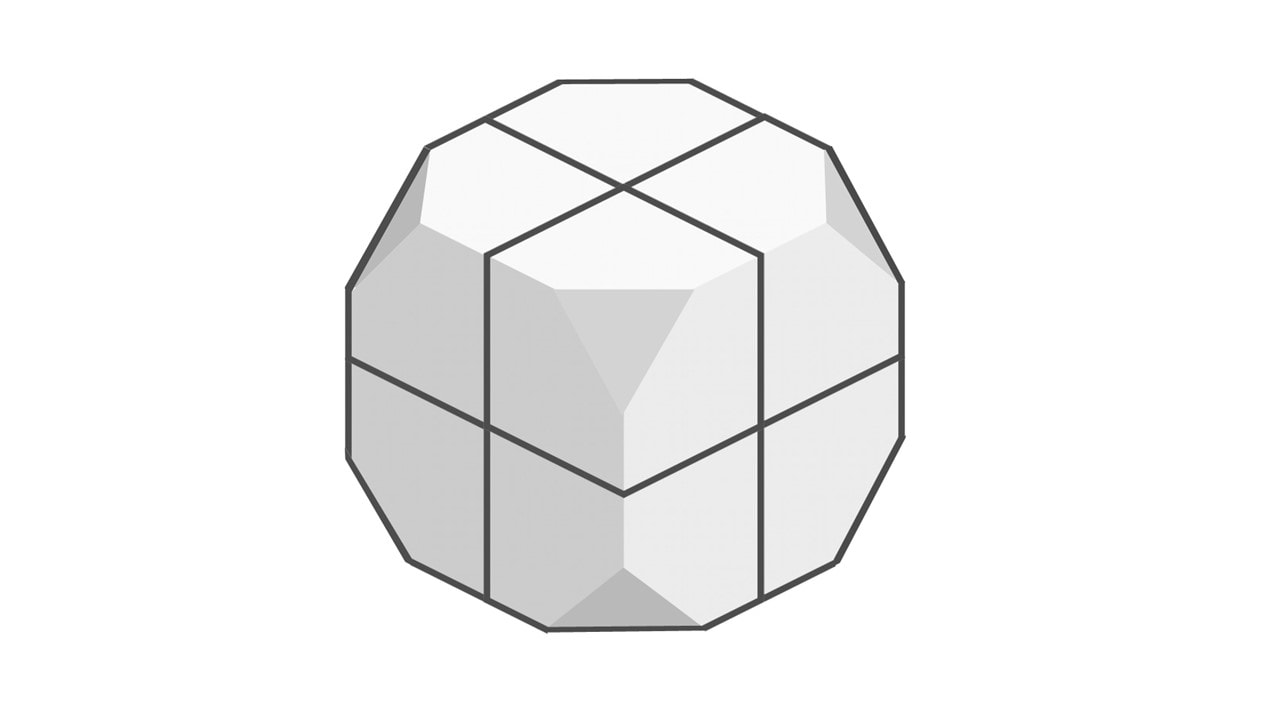
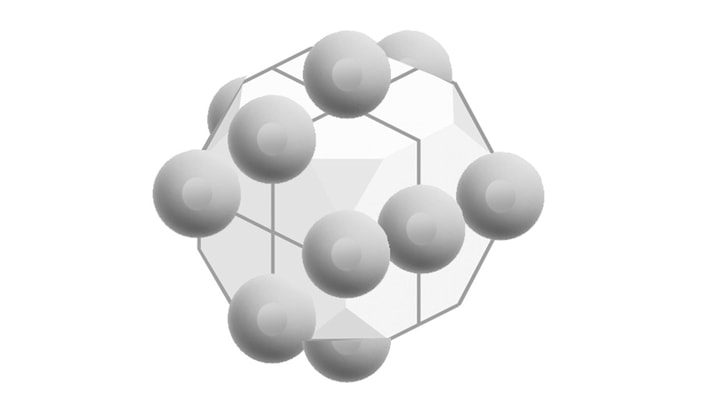
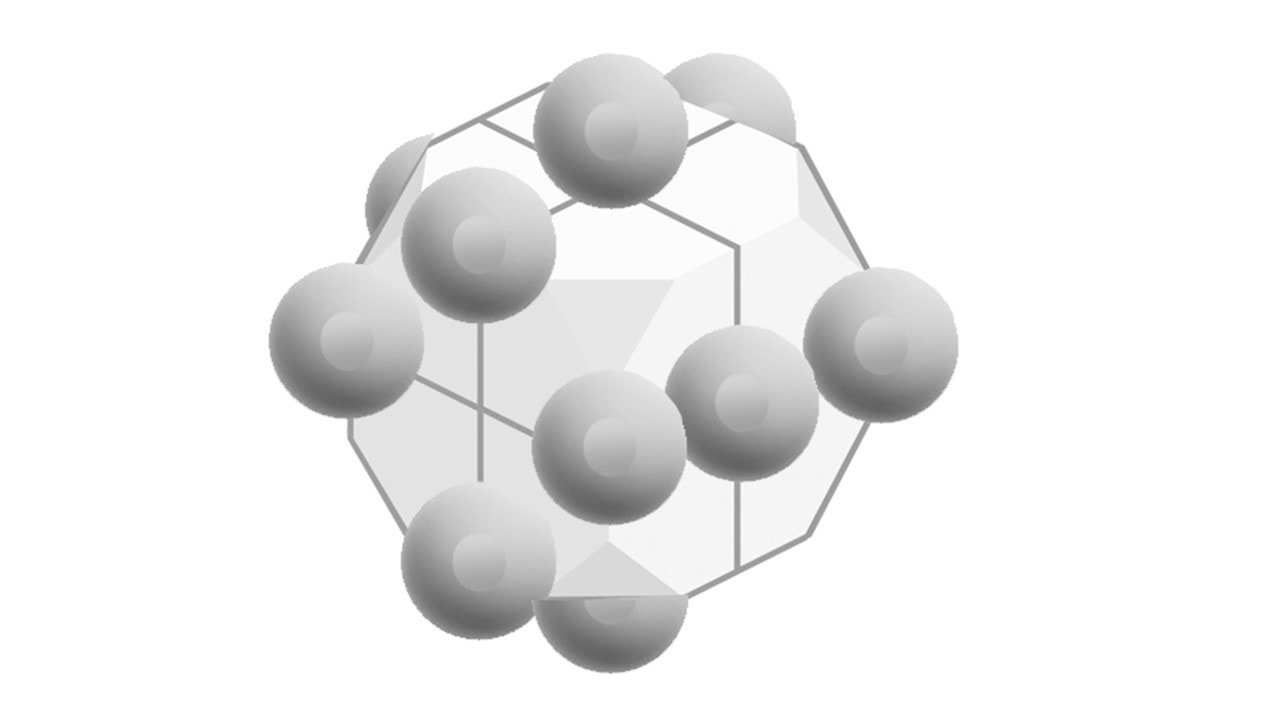
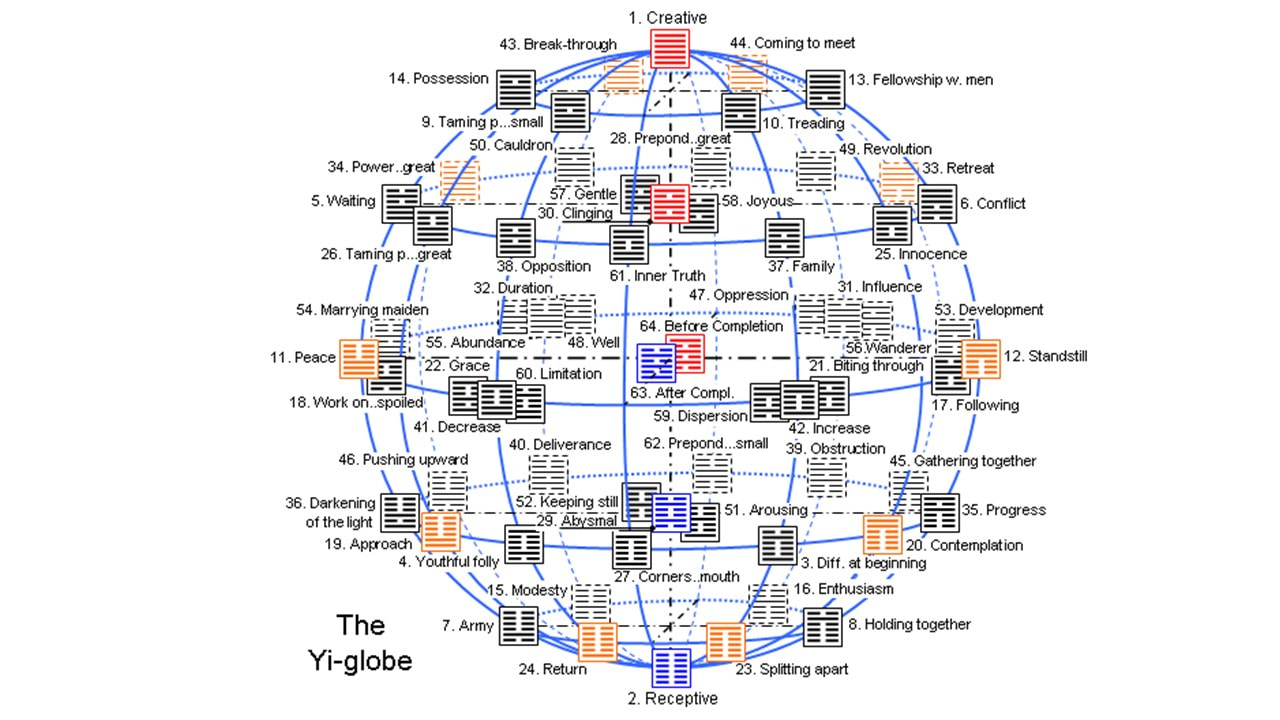
​The YiGua 64 Hexagram is not only represented in 2D. Many ‘scholars’ of the YiJing had attempted to describe the 64 Hexagram of YiGua into 3D. But what exactly would you want to achieve by such permutation in 3D?

Picture

​For one, YiGlobe tends to prescribed, “If the hexagrams of the I Ching are arranged in the space between the Creative and the Receptive according to the laws of change – and following the principles of symmetry and balance – a sphere will be produced. This sphere represents the whole universe, similarly to other circular and spherical symbols found in the myths. This is the Yi-globe.” Well, in other words, “sphere represents the whole universe, similarly to other circular and spherical symbols found in the myths” is like telling you “I know nuts about what I talking about.”
​For another, Nassim attempted to give meaning to the YiGua into his model of the universe, torus by relying on ‘artificial assumption’ based on writings in the internet. He is close, but not yet there… The ‘torus’ model showing one, uplift motion corresponding to another downward motions can represent how Qi spiral, thus the figure ‘8’ of the Early Heaven BaGua. Truly, how was these derived?

Picture

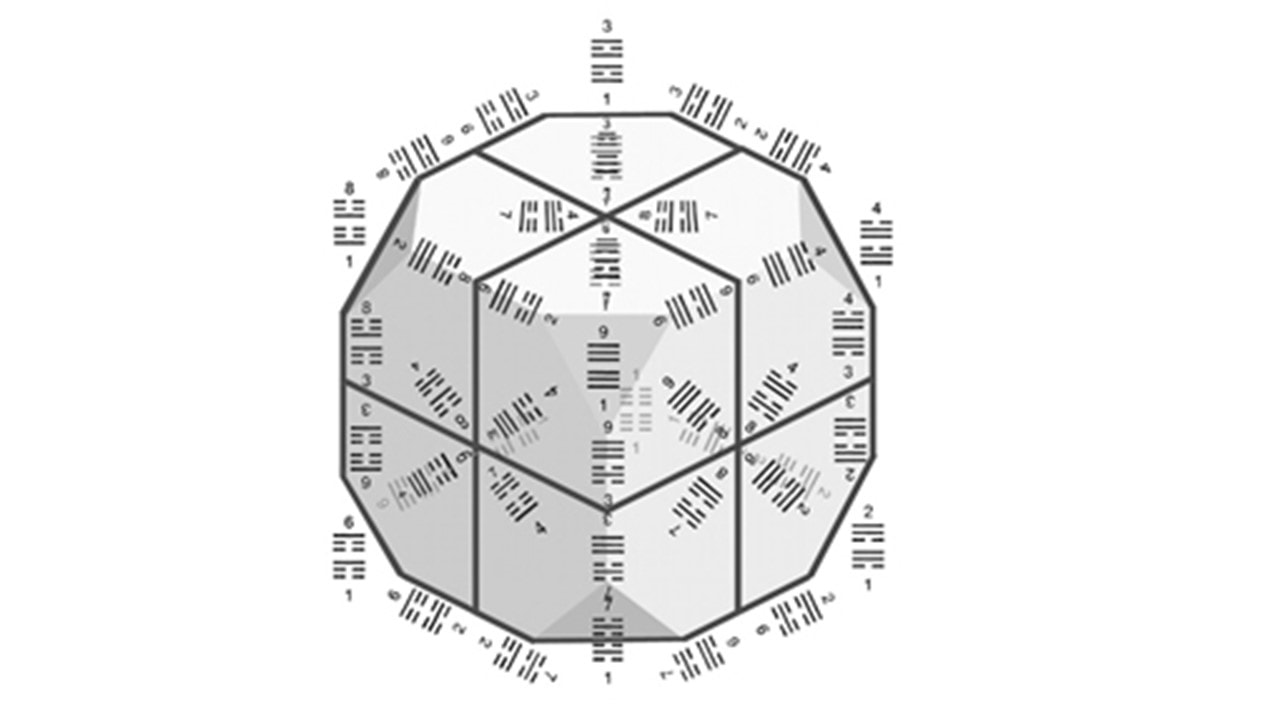
For the proponent of SanYuan DaGua SYDG 三元大卦 (Not XuanKong DaGua XKDG, as they know nuts about these), this 3D models attempt to ‘categorise’ the family, its usage, its efficacy and last but not least, its ‘effect’ of how an application of the Early Heaven principle be represented in the Later Heaven arrangement to be applied via its Middle Heaven application.
Picture

Yes, you read it correctly, Early-Later-Middle. The magic is vested in the ‘Mid Heaven Gua’. That can be rationalise in this 3D model. Surprising, this is exactly how, olden day master teach this 3D of ‘hyperspace’ to their students, way way back before we have developed the branch of physics called, string an m-theories. Hey, who says our ancestors are human? They are alien…

Picture

​

I will not go into ‘nitty gritty’ of illustrating how this 3D is assemble, but just give a teaser as to what the outlook is… You construct ‘A’ you get ‘B’ and you distil ‘C’… This again, is not ‘lineage secret’ but many schools did not know such fundamental. If only they know, they will ‘discard’ XKDG in favour of SYDG. This is also where your ‘application’ of BaZhai is derived from. Happy hunting…
7/28/2020
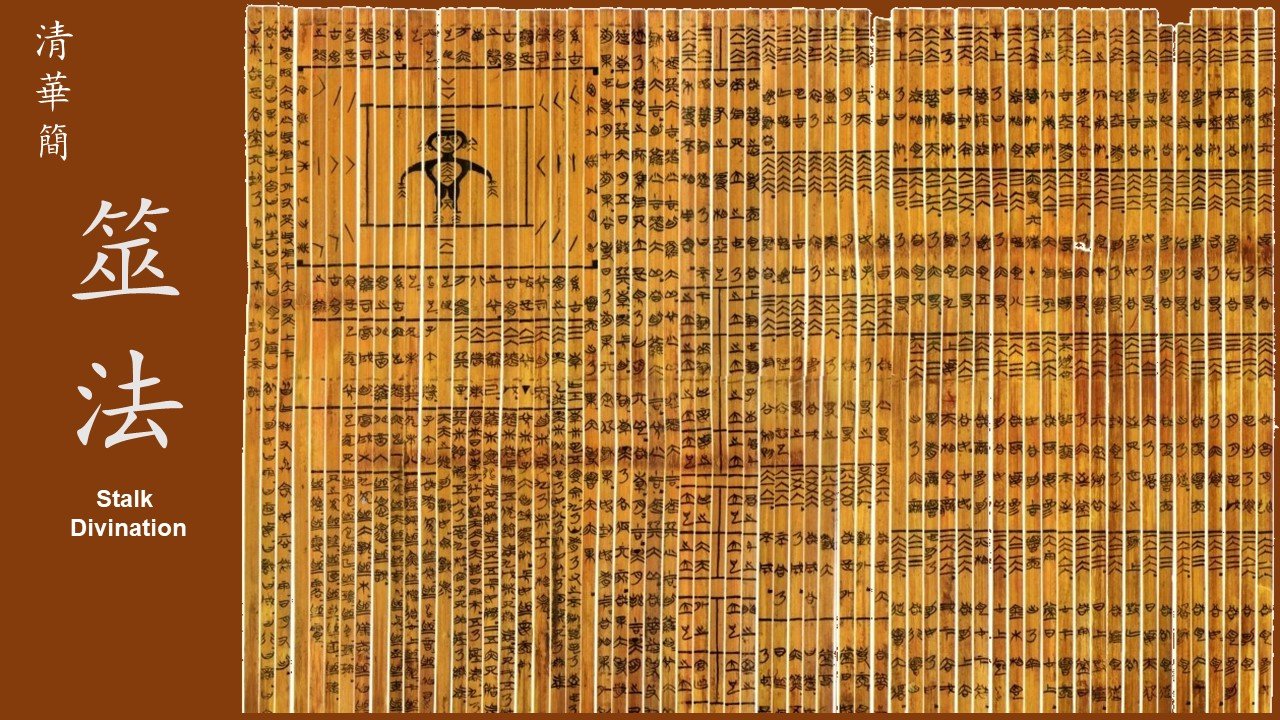
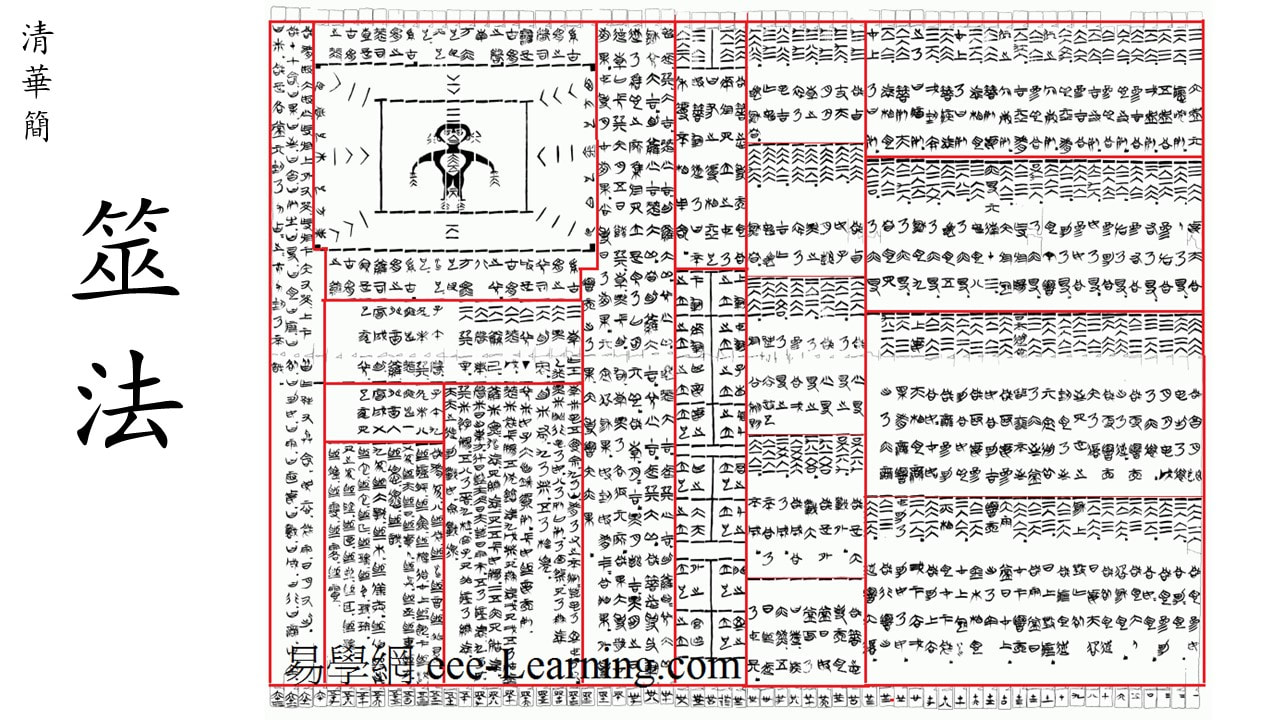
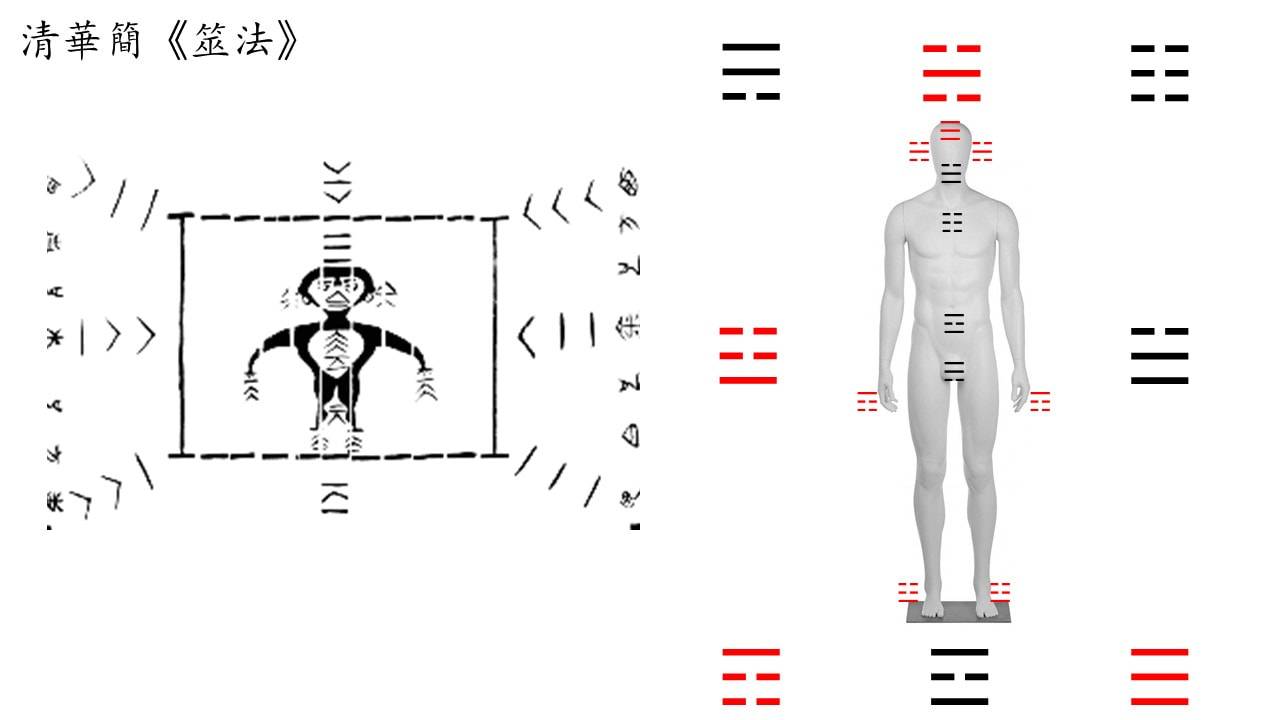
This book ‘Stalk Divination’ presented to me from my student was said to contain the illusive LianShan GuiChang Gua, somewhere in 2018. While contemplating to pen my thought, my Hard Disk HDD busted. Using the high end computers, the HDD could not recovered, until quite recently in 2020. I managed to use a ‘docking station’ fixed to an old computer, running Win-7 to retrieve it. Thus, this ‘overdue’ writing.
Picture

Picture

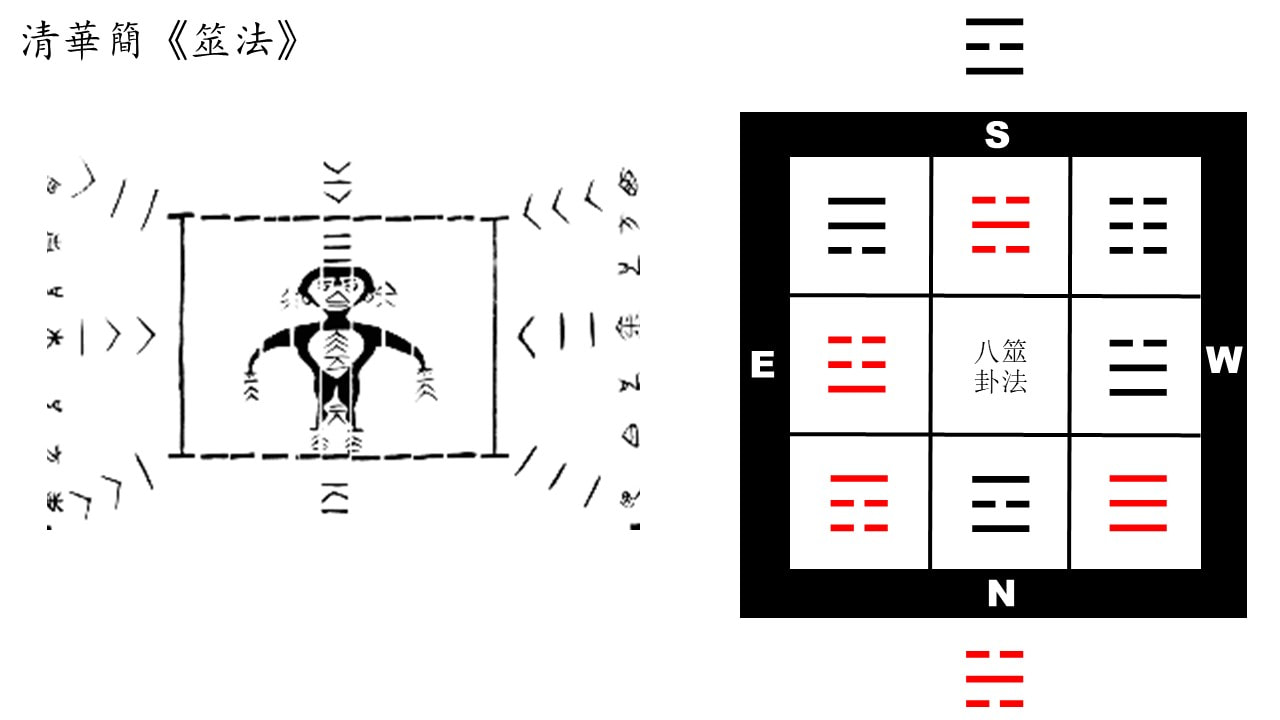
​Was said to be an alternative to YiJing or ZhouYi. It was believed to be part of the ‘extinct’ LianShan GuiChang Yi. Is it true? The Eight Trigram arrangement similar to Later Heaven but the Li and Kan has been interchanged…, thus a new form of BaGua. Mid Heaven Gua? Why did the Li and Kan interchanged?
Picture

​It also shows how the BaGua is assigned to the human anatomy. Unlike the YiJing, the Gua assigned are all different. What is the rationale behind it? What is the actual application?

2/17/2020

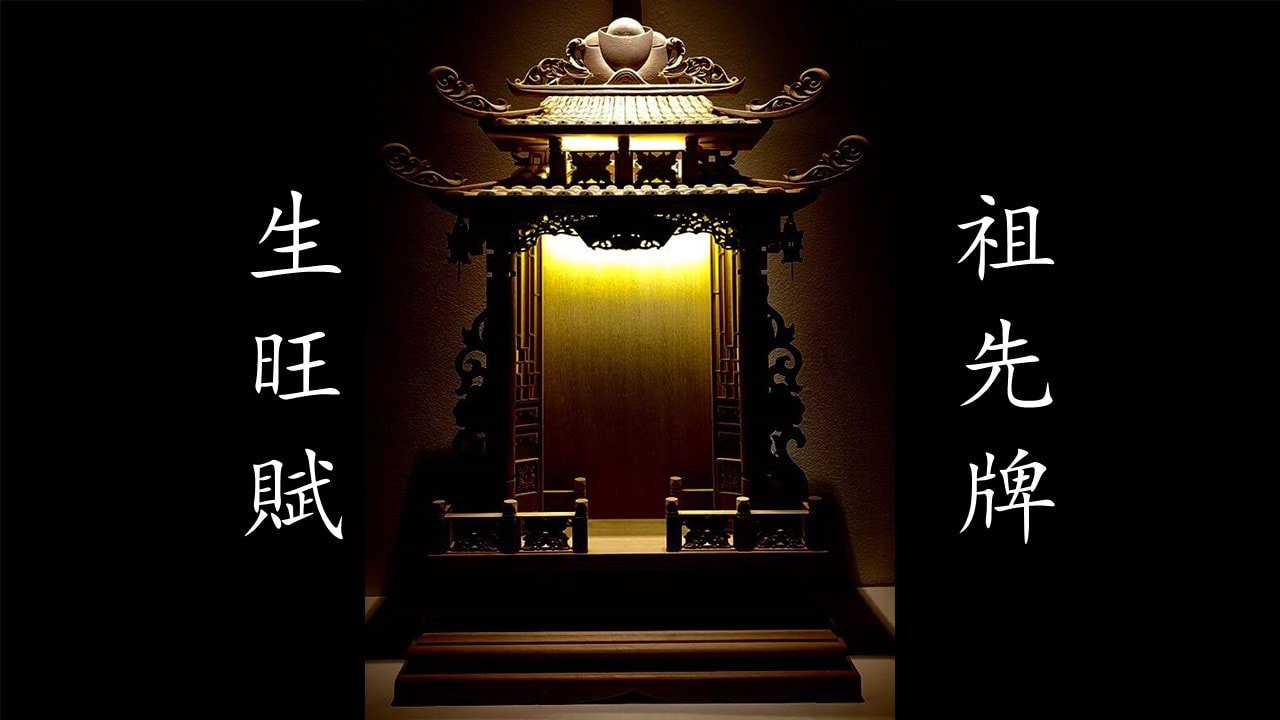
THE ANCESTRAL TABLET ​GROWTH PROSPER SCRIPT 祖先牌生旺賦

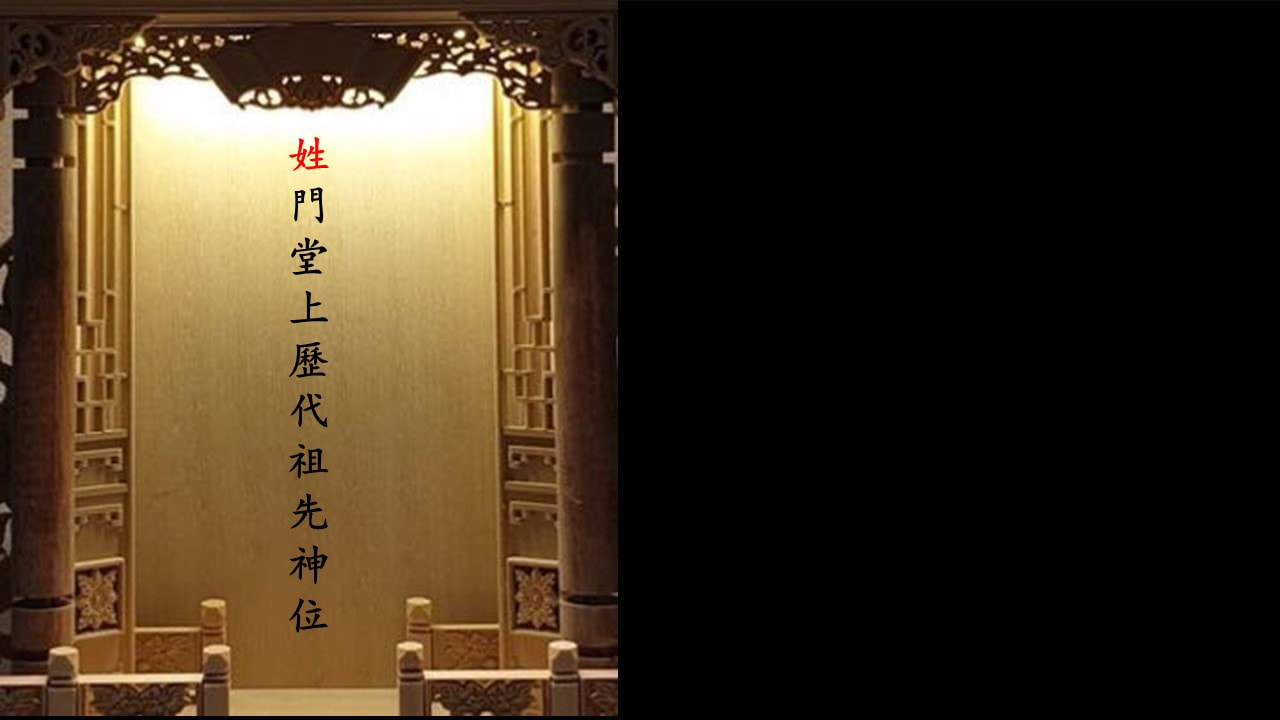
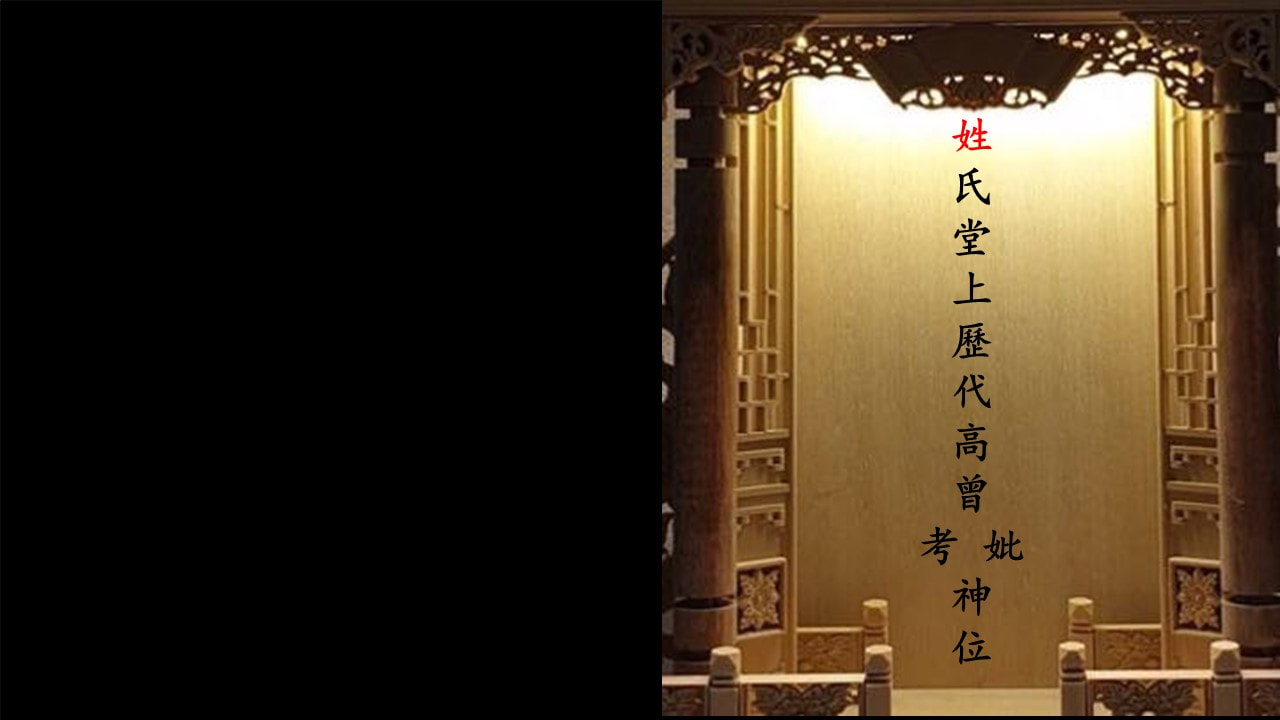
​Often when we audit a house FengShui, the ancestral tablet says a lot of thing about the household… just by looking at the inscription. The main inscription of the Ancestral Tablet usually follow the character arrangement of “Growth Prosper Script”生旺賦. This script differs from one place of origin (clans) to another.

Picture

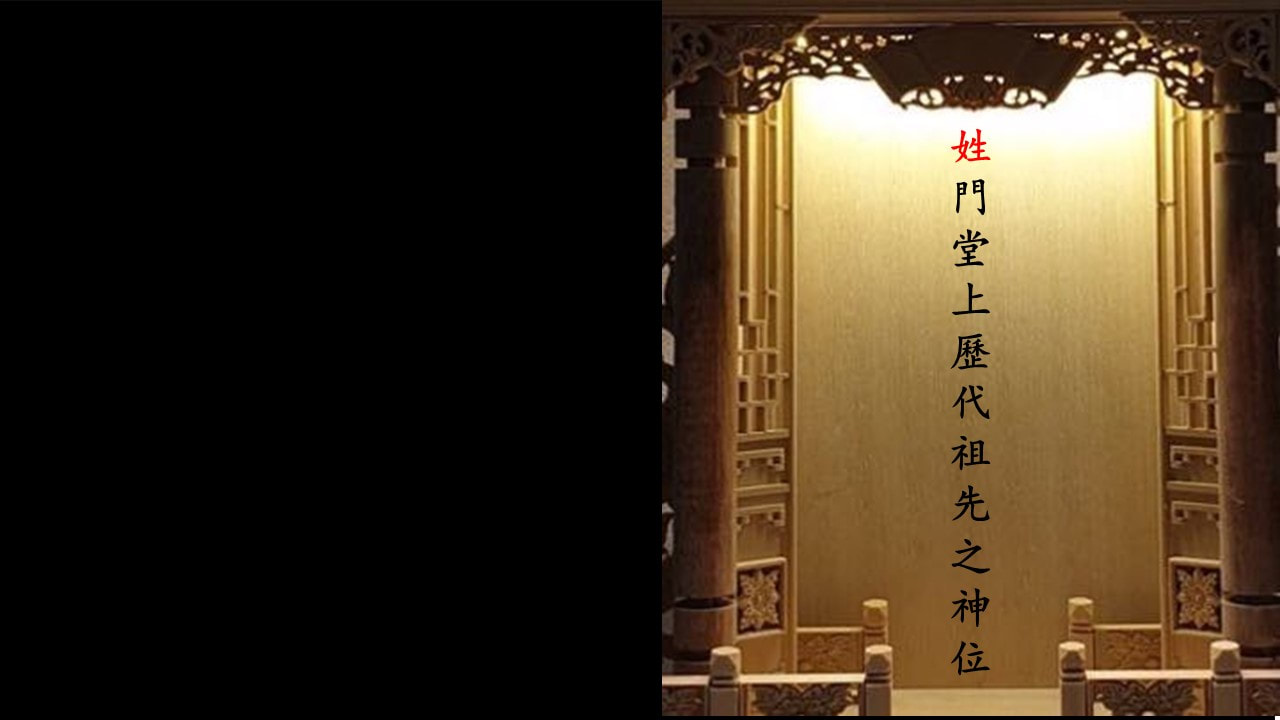
For example, to the Cantonese community, the inscription spelt:

(姓)門堂上歷代祖先 (之) 神位

[Translated as] “(Surname) ‘door’ [meaning ancestral] hall upon generation lineage past ancestral this spiritual position”

Comprises of 11 words, following the order of “Growth, Old, Sick, Death, Extinct” 生老病死苦, whereby, Growth is the start taking the element of wood, producing fire, earth, metal, water in a producing cycle of 5 elemental interplay. The last character, must therefore sits on “growth” 生, wood.

Although the 11 words arrangement of the inscription is correct, the words within these arrangement have significant errors that not many people could understand. Foremost there are rules governing the grave and the ancestral tablets and these rules are not the same. Only true initiated practitioners would be able to discern the differences. That is why by looking at the ancestral tablet, one will understand the luck befallen the family.
​
So, these arrangements, (姓)門堂上歷代祖先 (之) 神位, as far as the author is concerned, even though it was claimed to have been complying with the Cantonese clan, is unfortunately incorrectly worded.

Picture

The Hakkas, as being the “Guests”Clan has technically no “ancestral village” to return to. So, they are free to choose any clan to follow.
​
The FuJian, subscribed to only 10 characters for the inscription, (姓)門堂上歷代祖先神位, [Translated as] “(Surname) ‘door’ [meaning ancestral] hall upon generation lineage past ancestral spiritual position”. The word, “this” (之) is not included. The reason is the “Growth Prosper Script”生旺賦 that Fujian people use is different namely, “興旺敗劣” where the last character “position” 位 is prosperous 旺.
Picture

​The Hainanese, adopted a 11 characters inscription such as (姓)氏堂上歷代高曾 ‘考妣’[兩字並列當成一字] 神位, translated as “(Surname) ‘clan’ [meaning ancestral] hall upon generation lineage high [“the late” patriarch/matriarch]-[to be read as a single character] spiritual position” with “Growth Prosper Script”生旺賦 of Growth, Old, Sick, Death, Extinct” 生老病死苦, being the last character “position” 位 is “old” 老.
​In summary, the last character “position” 位 for:
1.            the Cantonese must sits “growth” 生;
2.            the Fujian must sits “prosperous” 旺;
3.            the Hainanese must sits “old” 老 and
4.            the Hakka can choose other clans to follow.
​This article was written in response to some Chinese articles of the same subject. Again, there is very little consensus on these. What we had written is based on our own school of thought minus the “trade secrets” of making the FengShui works…

Do YOU Want to KNOW More? Please GIVE us MORE ‘LIKES’
2/3/2020

天地人,三才 meaning Heaven Earth Man, the 3 matters, aptly to be called 三元,SanYuan has been bastardised in Chinese Metaphysics, more so in 风水,FengShui because most of the people talking about these are 江湖师,or common masters with shady pedigree. They have to resort to everything to make up the bucket full. Is ok, what to do? No right or wrong about it…

More importantly, have anyone discussed before the effects of 中天卦,or Mid Heaven Gua to the effect of FengShui? What is this? We were told that there is 先天卦,Early Heaven Gua is known to be something you want to control but you cannot control…. this is the 天,Heaven aspect of things. 后天卦,Later Heaven Gua is something you can control, but many people fails to control… this is the 人,Human aspect of things. 中天卦,Mid Heaven Gua is where you can control the uncontrollable … this is 地,Earth aspect of things.

Did anyone explain these? I purposely wrote about 天地人盘,Heaven Earth Human Plate as a pre cursor but it does not explain the meaning of 三元,SanYuan or 三才,SanCai… many also confused that 人 aspect is 中天,Mid Heaven… entirely misleading because of the wrong perception of 人,human always in between Heaven and Earth. They are confused as to which Heaven one is measuring…

Having said that where is your 中天卦,mid heaven Gua? Go ask your 师父,Master where is this illusive things? Sure they tell you is lost…. because they will say, 连归卦,Lian Gui Gua, no longer exist. These they erred big time. Because, every legitimate 风水,FengShui method, there is 中天卦,mid heaven Gua application, otherwise the method doesn’t work!

So, do you need 八字,BaZi? In BaZi, the entire trinity of 三才,SanCai is already there… The 天,Heaven aspect of the natal chart, is the 定卦,Fixed unchanging Gua, the LP, is the 易卦,the 人,human aspect…. where is the 地 Earth aspect? So, as one can see… it is not true that you need to use BaZi in order to do FengShui…. BaZi itself has its own 中天, mid heaven. No need to mix and match.

I don’t blame anyone using 易经,YiJing for inspiration to make up another bucket full of craps… YiLi 易理,is the philosophical aspect governing 人 human aspect, not 地, Earth as in FengShui. That is why when we ask, how your YinYang turns, nobody can answer… This is very fundamental, but not many people knows and alas, all these 江湖师,or common masters with shady pedigree come out by the bucket loads to teach FengShui…

Often you heard that 生死有命,富贵在天,meaning Life and Death is within your Fate, Prosperity and Nobility is granted by Heaven. So you can see, it is entirely different matter. FengShui is dealing most with Nobility and Prosperity and this has to do with Heaven, something you wish to control but cannot control. Because of this people linked it with Karma, and it is one thing that is incomprehensible, Acinteyya (a pali word, please google for its meaning), yet people speaks about it pretending to be holier of the holiest. This is not FengShui…

Everyone is born in this world not as an ‘untainted white sheet’, each is the bearer of one own’s karma. Who grant you the authority to muddle into other people’s affair, especially so by using, FengShui? So you can see… that is why genuine school will tell you to 话说七分留三分,留下三分积儿孙。Quote seven points reserve three points, leaving behind three points for your children and grandchildren…. are you going to conveniently use BaZi to diagnose someone else problem and use FengShui to cure? Who are you? God?

And truly, if FengShui can only works for people who is good luck, therefore you need to vet their FengShui first, may I suggest, you don’t do FengShui, stamp collection is a better choice. In fact, Good Luck people no need to hire FengShui master, anything they do is already good vibes. Bad Luck people also no need to hire FengShui master because whoever they hire is lousy Masters, so their FengShui cannot work… so why bother looking at their BaZi? No brainer isn’t it?
​
LiChun 立春,is here today at 5:03pm. Let’s be less superstitious and have a great year ahead, knowing that the Year of the Rat isn’t Rat, but Zi 子,the beginning of everything prosperous, a dawn of a new beginning and don’t waste your time waiting in line at the ATM to deposit your money…
If you like this article, please give a LIKE otherwise, kindly ignore. Comments are welcome in QuanYuan’s FB Page as some FB group is not very happy with people asking too much question that their sifu cannot answer. Cheers.

11/13/2019

Dark Gold Divination 暗金伏断​

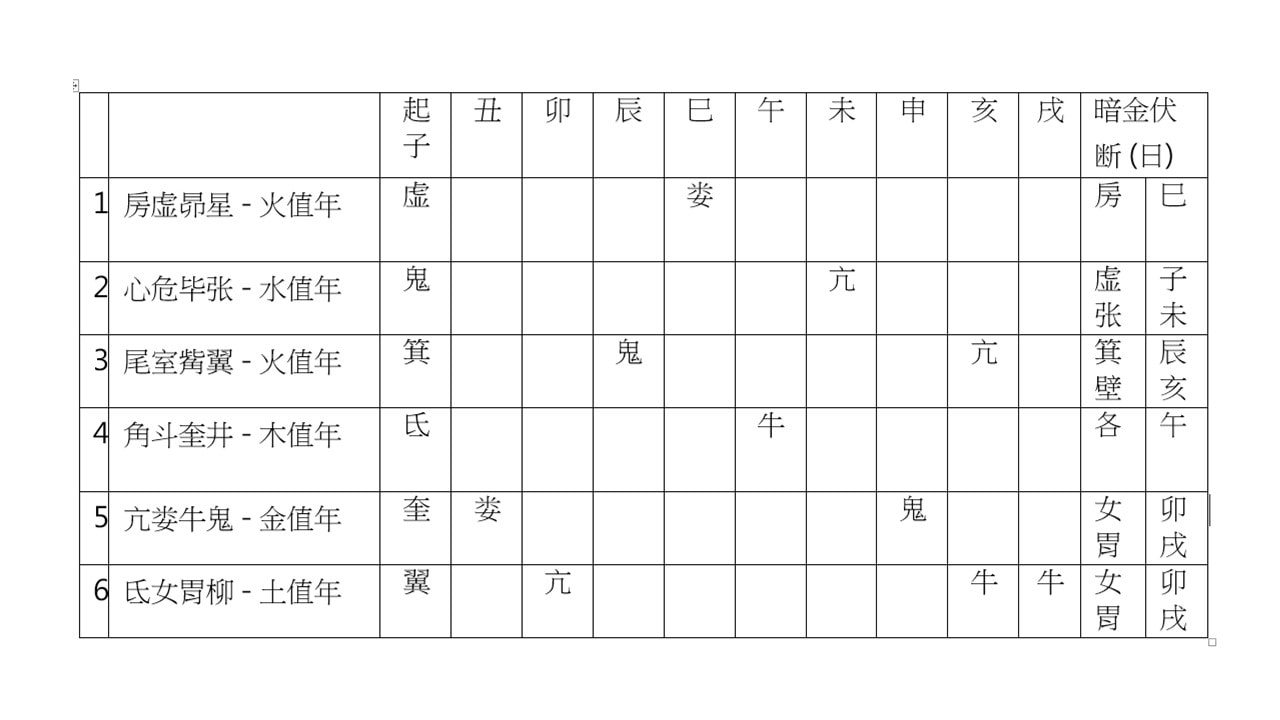
Dark Gold Divination暗金伏断 was derived from the book called Select in Seeking the Truth 选择求真.

The book state:

七曜禽星会者稀,日虚月鬼火从箕,水毕木氐金奎位,土宿还从翼上推。
​
Translated as: ‘Seven governing start detailed explanation, when the sun enters Xu 虚 the moon enters Gui 鬼 fire is overwhelming, water star at Bi 毕 wood star at Di 氐 metal star at Kuei 奎 position, earth asterism pushed from the wings. Apparently, it is the spin-off study of the Seven Governors and the Four Remaining 七曜四餘.

  1. The Seven Governors七曜 are:
    1. Venus 太白星(金星)
    2. Jupiter 岁星(木星)
    3. Mercury 辰星(水星)
    4. Mars 荧惑星(火星)
    5. Saturn 镇星(土星)
    6. Sun 太阳星(日)
    7. Moon太阴星(月)
  1. The Four Remaining 四餘are:
    1. Aurora 紫气
    2. Lunar Apogee月孛
    3. RaHu 罗睺
    4. KeTu 计都
To the practitioners of Dark Gold Divination暗金伏断, they understood that these verses referred to the asterism Kang 亢, Lou娄, Niu 牛 and Gui鬼, four metal elements that can divine matters, thus given the name Dark Gold Divination 暗金伏断. When the current annual star arrived at the Zi 子 such is the star attire.

Here, there 2 more considerations to be reckoned with:

  1. 28 Asterism 廿八宿
  2. Asterism Classifications 宿禽的順序

​Such as:

  1. 角 (jiao) horn – wood Jiao 木蛟 – wood govern year 木值年
  2. 亢 (kang) neck – metal dragon 金龍 – metal govern year 金值年
  3. 氐 (di) root – earth  badger 土貉 – earth govern year 土值年
  4. 房 (fang) house – sun rabbit 日兔 – fire govern year 火值年
  5. 心 (xin) heart – moon fox 月狐 – water govern year 水值年
  6. 尾 (wei) tail – fire tiger 火虎 – fire govern year 火值年
  7. 箕 (ji) basket – water panther 水豹 – water govern year 水值年
  8. 斗 (dou) dipper – wood Xie 木獬 – wood govern year 木值年
  9. 牛 (niu) ox – metal ox 金牛 – metal govern year 金值年
  10. 女 (nu) women – earth bat 土蝠 – earth govern year 土值年
  11. 虛 (xu) empty – sun rat 日鼠 – fire govern year 火值年
  12. 危 (wei) danger – moon swallow 月燕 – water govern year 水值年
  13. 室 (shi) camp – fire pig 火豬 – fire govern year 火值年
  14. 壁 (bi) wall – water armadillo 水狳 – water govern year 水值年
  15. 奎 (kui) legs – wood wolf 木狼 – wood govern year 木值年
  16. 婁 (lou) bond – metal dog 金狗 – metal govern year 金值年
  17. 胃 (wei) stomach – earth 土雉 – earth govern year 土值年
  18. 昴 (mao) Pleiades – sun rooster 日雞 – fire govern year 火值年
  19. 畢 (bi) net – moon raven 月烏 – water govern year 水值年
  20. 觜 (zi) beak – fire monkey 火猴 – fire govern year 火值年
  21. 参 (can) reference – water ape 水猿 – water govern year 水值年
  22. 井 (jing) well – wood An 木犴 – wood govern year 木值年
  23. 鬼 (gui) ghost – metal goat 金羊 – metal govern year 金值年
  24. 柳 (liu) willow – earth moose 土獐 – earth govern year 土值年
  25. 星 (xing) star – sun horse 日馬 – fire govern year 火值年
  26. 張 (zhang) extend – moon deer 月鹿 – water govern year 水值年
  27. 翼 (yi) wings – fire snake 火蛇 – fire govern year 火值年
  28. 軫 (zhen) chariot – water earth worm 水蚓 – water govern year 水值年
Seven governors’ governing year七政值年 are the sun, moon, fire, water, wood metal and earth classification based on the degree within the week as the starting point. In the:
​

  1. 23rd Year of the KangXi Reign the Upper Yuan JiaZi vested in the moon arriving in Bi 畢 of the Raven Year 乌值年;
  2. 9th Year of the Emperor QianLong Reign the Middle Yuan JiaZi vested in the moon lodge of Gui 鬼metal of the Goat Year 羊值年;
  3. 9th Year of the Emperor JiaQing Reign the Lower Yuan JiaZi vested in the moon lodge Yi 翼 fire of the Snake Year 蛇值年;
  4. Arriving to Upper Yuan JiaZi vested in the moon lodge Di 氐 earth of the Monkey Year 貉值年.
Elemental governing year four asterisms grouping:

  1. (Fang, Xu, Mao and Xing) 房虚昴星 – 火值年
  2. (Xing, Wei, Bi and Zhang) 心危毕张 – 水值年
  3. (Wei, Shi, Ji and Yi) 尾室觜翼 – 火值年
  4. (Jiao, Dou, Kui and Jing) 角斗奎井 – 木值年
  5. (Kang, Lou, Niu and Gui) 亢娄牛鬼 – 金值年
  6. (Di, Nu, Wei and Liu) 氐女胃柳 – 土值年
  7. (Ji, Bi, Can and Zhen) 箕壁参軫 – 水值年
​Sequence as the seven governors travel into each of the branches:
Picture

The Dark Gold Divination暗金伏断 7 governor rule states:
​

  1. The moon 月governs Wei hour 未时;
  2. The water 水 governs ChenHai hours 辰亥时;
  3. The metal 金 governs ChouShen hours 丑申时;
  4. The sun 日 governs Si hour 巳时;
  5. The fire 火 governs YinYou hours 寅酉时;
  6. The wood 木 governs Wu hours 午时;
  7. The earth 土 governs MaoXu hours 卯戌时;
10/1/2019

HOW MANY SONGS…

​Turning over the pages of the peasant calendar, we often look at the peasant’s chronology. In the olden day, to know the outline of the year there are methodologies such as:

  1. How many Dragons Govern Water幾龍治水、
  2. How many Days of Happiness 幾日得辛、
  3. How many Oxen Toils the Fields 幾牛耕地、
  4. How many Maidens Manage the Silkworms 幾姑把蠶、
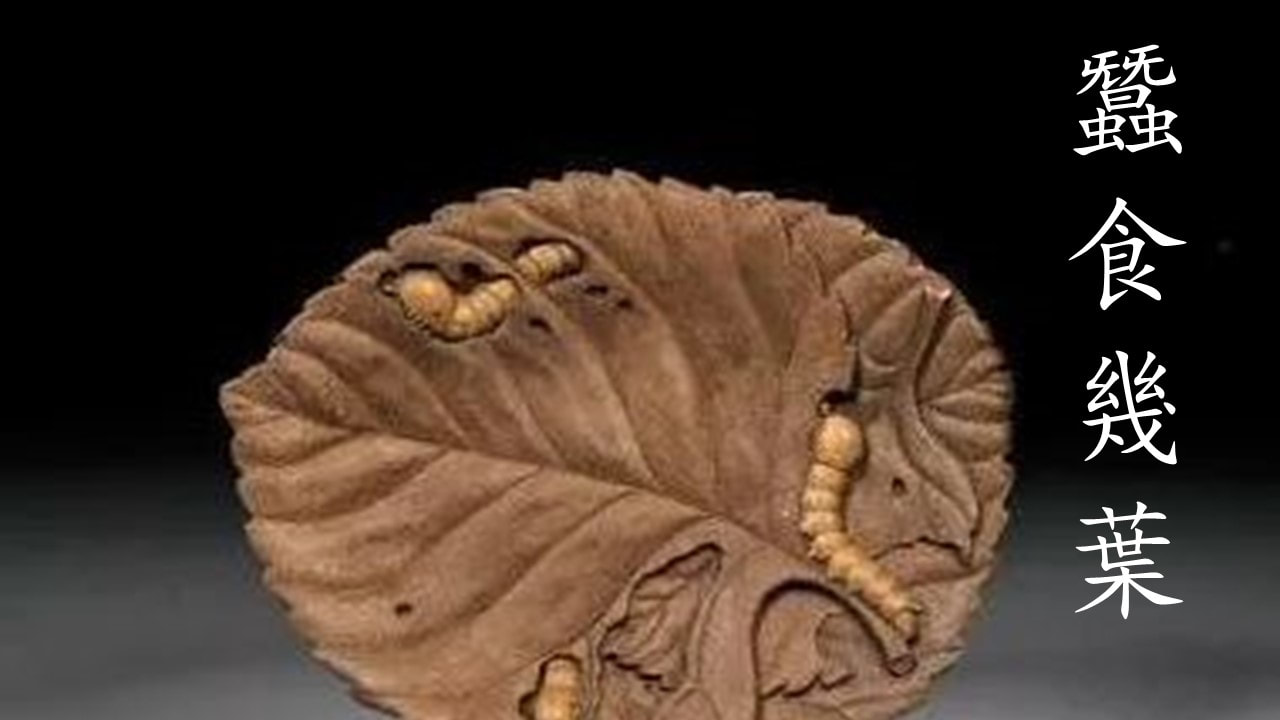
  5. How many Leaves the Silkworm Eats 蠶食幾葉、
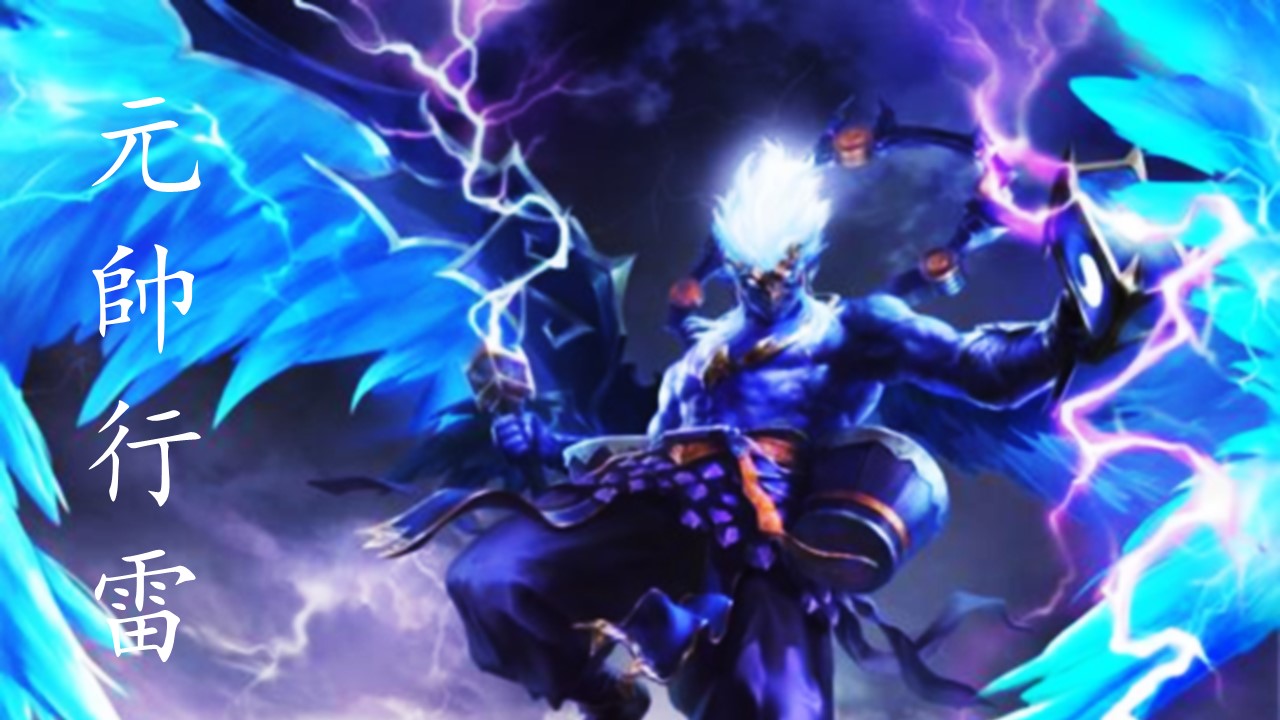
  6. Heavenly Marshall Moves Lightning元帥行雷。

These are the way our Chinese ancestors recorded the influence and prediction of the solar terms given by the heavenly stems and earthly branches on the farming for the year. Their main functions are to estimate of rain and sun for agricultural works and harvests for the year.
Picture

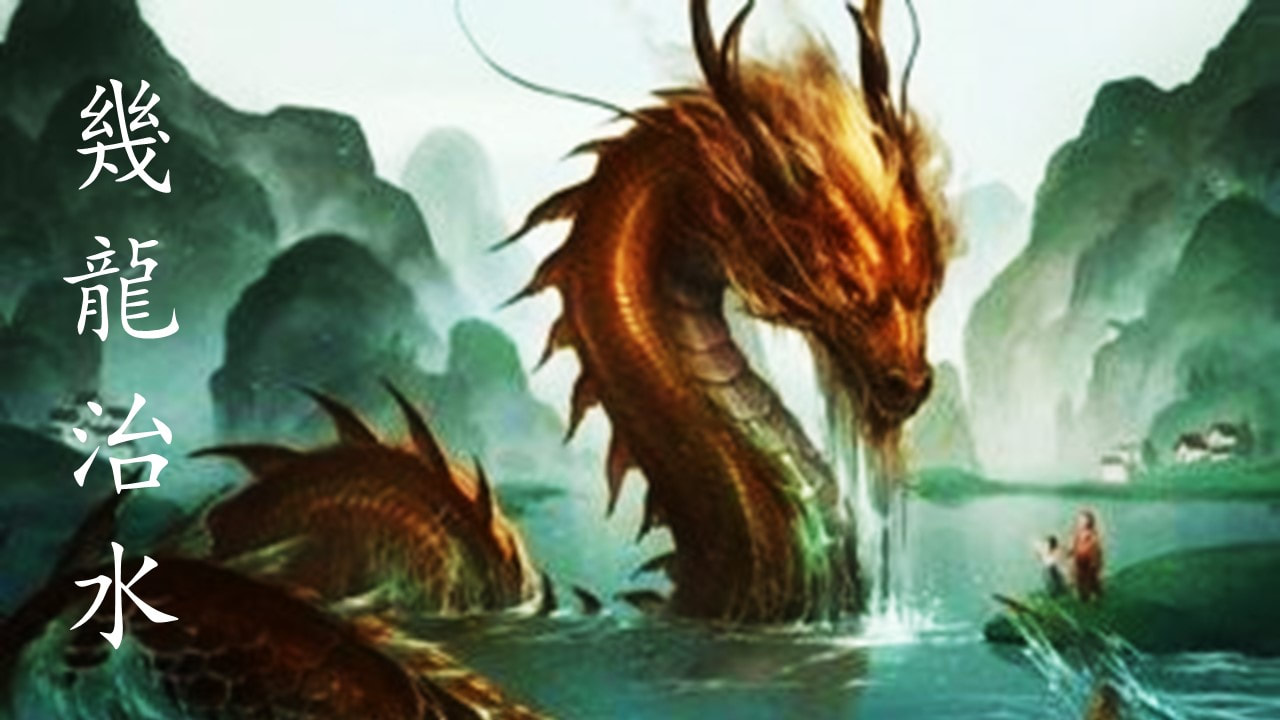
​How many Dragons Govern Water幾龍治水

According to the first Chen day 辰日of the first month of the year (Chen 辰 is the dragon), it is decided on the first few days. For example: –

  1. On the fifth day of the first month, it is called “Five Dragons Water” 五龍治水;
  2. On the fourth day of the first month of the 79th Year of the Republic of China 民國九十七年 is the GengChen Day 庚辰日 was classified as the “four dragons to control water” ;
  3. It is said that the more the number of dragons, the less rainfall and
  4. the less the number of dragons, the more rainfall;
  5. the so-called dragon indicate it does not rain; there is a saying “Dragon does not rain” and “The chicken does not lay eggs” 龍多不下雨, 雞多不下蛋;
  6. 6-7 dragons, rain is moderate;
  7. 10 and above dragons, rain very little.
Picture

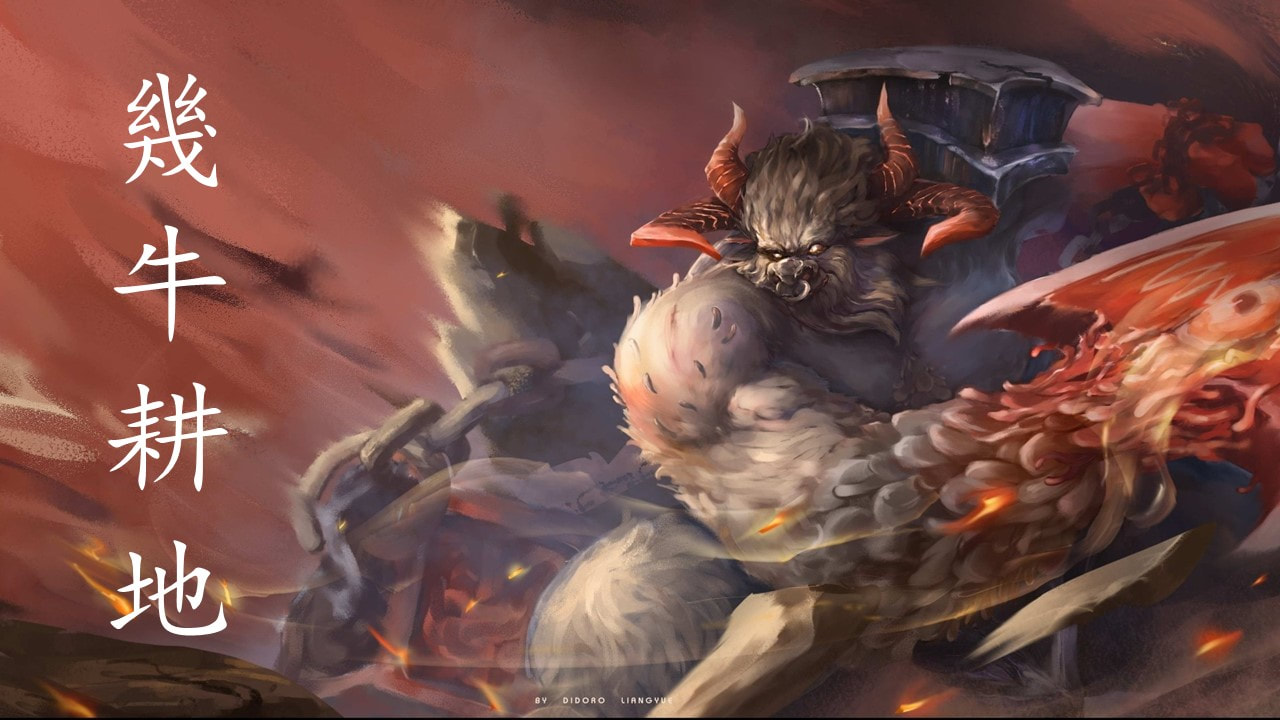
​How many Oxen Toils the Fields 幾牛耕地

​According to the first few days of the Lunar New Year, the Chou 丑Day is used to determine Oxen Toils the Fields, which is the first Chou 丑Day of the year (the Chou 丑is the Ox). At the beginning of the first month, it is “a few Oxen Toils the Fields ” For example, in the first day of the first month of the Lunar New Year in the 97th Year of the  Republic of China, the first day of the lunar calendar was DingChou 丁丑日, so it was “one Oxen Toils the Fields.” The more number of Oxen Toils the Fields the much better it is for the year.
Picture

​How many Days of Happiness 幾日得辛

​It is based on the “Xin” day 辛日 of the first day of the peasant calendar. The meaning of “satisfaction” in Xin also represents the meaning of happiness. The closer the Xin Day to the Arrival of Spring is better. The sooner you get the Xin Day, the more the harvest will come earlier this year. The longer you get the Xin day, the more the harvest will come later.
Picture

​How many Maidens Manage the Silkworms 幾姑把蠶

According to the Qing Guangxu’s “Jiaxing Fuzhi” records:

  1. The first maiden placed the silkworms with rotten leaves,
  2. The second maiden placed the silkworms with quality leaves, and
  3. The third maiden placed the silkworm leaves of both rotten and quality.

These maidens has these silkworms based on the year’s earthly branches to define:

  1. Yin, Shen, Si and Hai (4 Growths) 寅申巳亥, as the 4 Big Maiden peeling silkworm大姑把蠶;
  2. Zi, Wu,Mao and You (4 Cardinals) 子午卯酉,as the 4 Second Maiden peeling silkworm 二姑把蠶;
  3. Chen, Xu, Chou and Wei (4 Graves) 辰戌丑未, as the 4 Third Maiden peeling silkworm三姑把蠶.
Picture

​How many Leaves the Silkworm Eats 蠶食幾葉

It is based on the first NaYin wood element 納音「木」 day of the New Year. To determine the number of leaves to eat. For example:

  1. In 1997, the sixth day of the lunar calendar RenWu Day 壬午日is the NayYn wood, coincides with the sixth day from the Spring Festival.
  2. It is said that when the leaves are eaten less, the silkworms are thin and small, and
  3. When they are eaten with more leaves, the silkworms are large.
Picture

​Heavenly Marshall Moves Lightning元帥行雷

​The ThongShu has recorded this Heavenly Marshall Moves Lightning Method that is to use the twelve marshals to match the year’s earthly branches:

  1. Zi Year (Xin Marshall) 子年( 辛元帥),
  2. Chou Year (Deng Marshall) 丑年( 鄧元帥),
  3. Yin Year (Zhao Marshall) 寅年( 趙元帥),
  4. Mao Year (Zhang Marshall) 卯年( 張元帥),
  5. Chen Year (Yang Marshall) 辰年( 楊元帥),
  6. Si Year (Ma Marshall) 巳年( 馬元帥),
  7. Wu Year (Wang Marshall) 午年( 王元帥),
  8. Wei Year (Yin Marshall) 未年( 殷元帥),
  9. Shen Year (Wen Marshall) 申年( 溫元帥),
  10. You Year (Kang Marshall) 酉年( 康元帥),
  11. Xu Year (Yue Marshall) 戍年( 岳元帥),
  12. Hai Year (Zhu Marshall) 亥年 (朱元帥) 。

Very little has been disclosed on to the usage of this Marshall. Does it portend when and where has more rains? More lightning? Or simply deities for the Daoist to pray?

Scroll to Top