


- Upon research proposal accepted, a Sv will be allocated;
- You shall make initial contact and inform him of any major problems;
- Sv will not specify research materials nor will he direct your work;
- Sv is to offer guidance and comments;
- Queries on topics, methodology, referencing be directed to your Sv no more than two chapters; and
- Sv will not read a full draft.
Remember, your Sv may sometimes acted like a ‘zen master’, very little word and it is priceless when he instruct you and you have to come out with the rest of the ‘instruction’, as though you are an ‘enlightened researcher’. It is too often to hear:
[I] think my powers are very limited in terms of teaching LLM students how to write. This is a challenge across the board […].
EFFECTIVE READING AND WRITING
[I]t is not immaterial what you think, there are ways in academia we ask you to present it.
Therefore, take note of the followings:
- Consider ‘neutral tone’;
- Avoid putting your position, i.e. your opinion unless it is a published opinion;
- Weight ‘published materials’ from both sides of the fence. In fact, most published opinions are ‘lopsided’. Only state which sides had heavier ‘balance of probability’. Then conclude with such opinion.
- Academic writing is not about your opinion. The entire LR is about you serving enough time of immersing yourself to others’ ‘informed opinions’ to finally come to a conclusion of whether:
- Is there a ‘gap of knowledge’ that the academic fraternity has not addressed?
- Which ‘informed opinions’ remained to be valid and should be upheld?
- Adhering to ‘Bloom Taxonomy’, you must aim at presenting ‘critical analysis’ and ‘evaluation’ in every paragraph you write.[1] You cannot present originality (or create) unless you complete this process of analysis and evaluation; and
- Every word, sentence and paragraph must be ‘justified’ if one seeks perfection.
—————————————
[1] Bloom, Taxonomy of Educational Objectives (Handbook One 1956) pp.201-207: Outlined Knowledge, Comprehension, Application, Analysis, Synthesis and Creative.
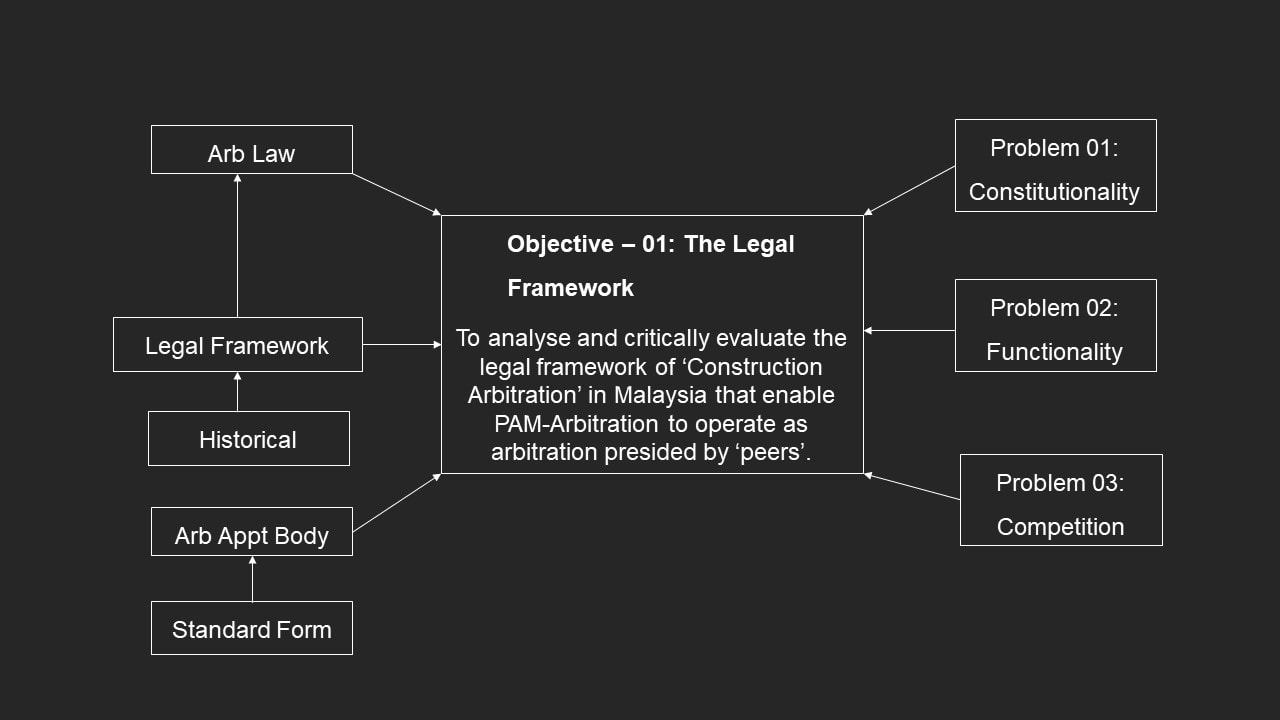
LITERATURE REVIEW
[O]ne of the reasons why you are required to use academic or legal sources is that those works have been peer reviewed before publishing and include a section describing the method of research and its limitations. This is science and must be supported by tried and tested work. This does not mean that the published work is correct. Quite the opposite, it if often incorrect and therefore it is often discredited and dismissed.
To have a good grasp on the literature that is available, nothing short of getting:
- Up-to-date case law/legislation/other sources (i.e., journal article/conference papers/books) [depth of research];
- Books by authoritative authors [depth of research];
- Review and systematically records on the issues/ arguments/ source/ themes relevant to your objectives [depth of research];
- Always have a road-map to point those sources to the objectives you are presenting [depth of structure];
- Conclude each point by either acknowledging the ‘accepted informed opinion’ or ‘knowledge gaps’ [depth of arguments];
- Must show critical analysis and evaluation at each paragraph [depth of arguments].
REFERENCING
[T]hat said you don’t appear to follow some of the guides provided […] i.e., why are you referencing is a bespoke half Harvard half OSCOLA style?
I took notice of this shortcoming and found my inclination of ‘Harvard style’ vs. OSCOLA, more of practicality, as the followings:
- In OSCOLA, we just write, ‘[…] Powell-Smith and others contended, […]’ as compared to ‘Power-Smith et.al (2020) contended, […]’ or ‘[…] (Power-Smith et.al, 2020)’ as in Harvard. Apparently, the Harvard style seems less-wordy.
- As footnotes, the OSCOLA required the annotation of ‘Powell-Smith [n.2] at [no.]’ as compared to ‘Powell-Smith et.al (2020) para. [no.] which is much straight forward.
Generally, the RGU required strict adherence to OSCOLA. I find the following to be useful:
- Citation of a book n, ‘n V. Powell-Smith, Construction Arbitrations (2nd edition Blackwell 2020) 123’; in the following footnotes, ibid 123 can be used but these ‘Latin-gadgets’ can be replaced with ‘n Powell-Smith [n 2] 123’; One quotation, one author, one reference, unless this is not a quotation (in which case there must not be quotation marks).
- Citation of a case law within the book, i.e. ‘n Powell-Smith [n 2] 123: cited A v B [1999] MLJ 123’;
- Citation of a case law, ‘n A v B [1999] MLJ 123’ or ‘A v Bn’, ‘n [1999] MLJ 123’; alternatively, ‘n A [n 2] 123’;
- Quoting, ‘The House of Lord […]’n or [T]he House of Lords […]n , ‘n Powell-Smith [n 2] 123: citing A v B [1999] MLJ 123’; or ‘n Powell-Smith [n 2] 123: emphasis given’;
- Citation of articles, i.e. ‘n Powell-Smith ‘PAM 69’ (1999) 1 MLJ 123’;
- Citation of thesis, i.e. ‘n Powell-Smith ‘Construction Law of Malaysia’ (LLM RGU 1999)’; and
- Citation from webpage, i.e. ‘n Powell-Smith ‘Virtual Construction Law’ (Star, 3 May 2020) <www.star.com/2020/06/index.html> accessed 19 Nov 2021’.