
By: Prof Robert Powell & Prof Elias Salleh
THE BEGINNING

Julius Posener
|
Architectural education in Malaysia had its humble beginnings in a Technical College at Gurney Road (now Jalan Semarak) Kuala Lumpur in the early 1950s. The Technical College offered Diploma courses in key technical disciplines such as Engineering, Building and Surveying. The German-born Head of the Department of Architecture, Julius Posener, was a friend of Le Corbusier and Marcel Breuer and the curriculum in the Technical College was based on the Bauhaus but adapted to the tropics. The Technical College course (funded by the Colombo Plan) was intense and offered an excellent grounding in architecture. In the 2nd year students had to produce a complete set of working drawings. They learned how to calculate beam and joist sizes, how to perform a slump test, and how to design a drainage layout.
The Technical College evolved into the present Universiti Teknologi Malaysia (UTM), which is one of the main government-run institutions of higher education. Thereafter, Malaysian architectural education has been progressively developed through various public as well as private institutions of higher education, guided by the Board of Architects Malaysia (LAM) and the Ministry of Education Malaysia. As of 2019 there are now seventeen (17) accredited Schools of Architecture in Malaysia, eleven (11) of which are fully supported by government. |
ARCHITECTURE & EDUCATION FOR TOMORROW
Almost sixty years after architectural education was initiated in Malaysia, it would seem most appropriate now to reflect on the state of the art and the way forward for local architectural education, taking into consideration the global and local issues of Sustainable Development Goals that seem to affect every facet of human life. Questions can be asked whether there is sufficient room and willingness to avoid ‘one size fits all’ situation for our local Schools of Architecture?
ARCHITECTURE & THE INTERNET OF THINGS
Going by the current industrial shift taking place, especially in relation to IR4.0, the architectural profession needs to be sufficiently equipped to keep abreast with these developments. Hence there are expectations that future architects would be able to cope with and participate in the new working environment enriched by the internet of things.
PRACTICE AND APPRENTICE
|
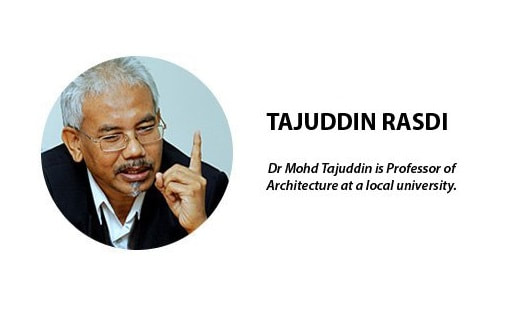
The relationship between architecture and the real world concerns and architectural practice is a subject matter of great importance to the Board of Architects Malaysia as the governing body for the architectural profession. Thus TamilSalvi Mari explores service-learning as an approach for a strong foundation for students in this respect. Likewise both the physical and working environment in which architectural education takes place has to be conducive and in tune with the creative and explorative nature of architectural education. The contribution by Professor Tajuddin can be viewed as a personal assessment of some current campuses offering architectural programmes.
|
|
THE FUTURE
Numerous articles on architectural education in Malaysia have been published in learned journals but, surprisingly, this appears to be the very first book to be published by Pertubuhan Akitek Malaysia or indeed by an academic institution, on this important subject. It is anticipated that more will emerge from a reinvigorated PAM Education Committee.